

The Lord descended to the top of Mount Sinai and called Moses to the top of the mountain.
Exodus 19:20
In the book of Exodus, the Ten Commandments are ethical directives, structured as a covenant document. They were inscribed by God onto two stone tablets and given to Moses at Mount Sinai.
The following text is sourced from Part 3, Section 2 of the Compendium of The Catechism of The Catholic Church.
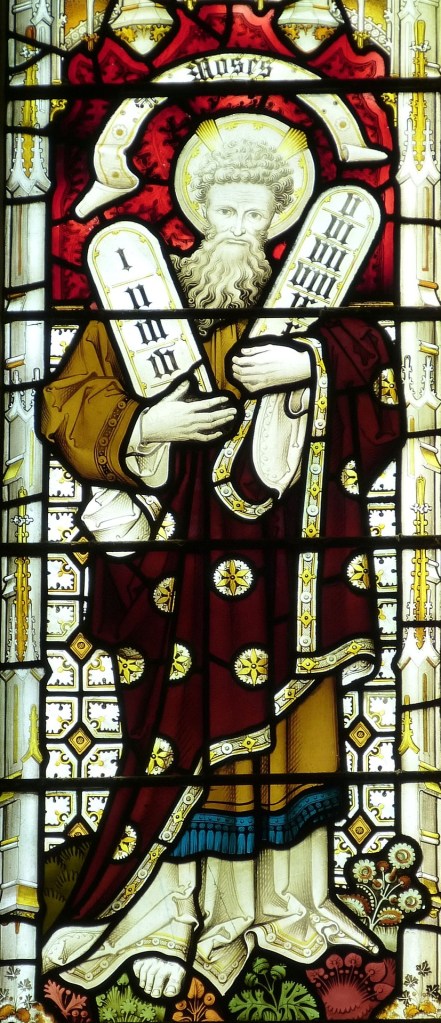
1. I am the Lord your God: you shall not have strange Gods before me.
2. You shall not take the name of the Lord your God in vain.
3. Remember to keep holy the Lord’s Day.
4. Honour your father and your mother.
5. You shall not kill.
6. You shall not commit adultery.
7. You shall not steal.
8. You shall not bear false witness against your neighbour.
9. You shall not covet your neighbor’s wife.
10. You shall not covet your neighbour’s goods.
The Ten Commandments Comprehensive Guide

The 1st Commandment
I am the Lord your God: you shall not have strange Gods before me.
- What is implied in the affirmation of God:
“I am the Lord your God” (Exodus 20:2)?
This means that the faithful must guard and activate the three theological virtues and must avoid sins which are opposed to them. Faith believes in God and rejects everything that is opposed to it, such as, deliberate doubt, unbelief, heresy, apostasy, and schism. Hope trustingly awaits the blessed vision of God and his help, while avoiding despair and presumption. Charity loves God above all things and therefore repudiates indifference, ingratitude, lukewarmness, sloth or spiritual indolence, and that hatred of God which is born of pride. - What is the meaning of the words of our Lord,
“Adore the Lord your God and worship Him alone” (Matthew 4:10)?
These words mean to adore God as the Lord of everything that exists; to render to him the individual and community worship which is his due; to pray to him with sentiments of praise, of thanks, and of supplication; to offer him sacrifices, above all the spiritual sacrifice of one’s own life, united with the perfect sacrifice of Christ; and to keep the promises and vows made to him. - In what way does a person exercise his or her proper right to worship God in truth and in freedom?
Every person has the right and the moral duty to seek the truth, especially in what concerns God and his Church. Once the truth is known, each person he has the right and moral duty to embrace it, to guard it faithfully and to render God authentic worship. At the same time, the dignity of the human person requires that in religious matters no one may be forced to act against conscience nor be restrained, within the just limits of public order, from acting in conformity with conscience, privately or publicly, alone or in association with others. - What does God prohibit by his command,
“You shall not have other gods before me” (Exodus 20:2)?
This commandment forbids:
Polytheism and idolatry, which divinises creatures, power, money, or even demons.
Superstition which is a departure from the worship due to the true God and which also expresses itself in various forms of divination, magic, sorcery and spiritism.
Irreligion which is evidenced: in tempting God by word or deed; in sacrilege, which profanes sacred persons or sacred things, above all the Eucharist; and in simony, which involves the buying or selling of spiritual things.
Atheism which rejects the existence of God, founded often on a false conception of human autonomy.
Agnosticism which affirms that nothing can be known about God, and involves indifferentism and practical atheism. - Does the commandment of God, “You shall not make for yourself a graven image” (Exodus 20:3), forbid the cult of images?
In the Old Testament this commandment forbade any representation of God who is absolutely transcendent. The Christian veneration of sacred images, however, is justified by the incarnation of the Son of God (as taught by the Second Council of Nicea in 787AD) because such veneration is founded on the mystery of the Son of God made man, in whom the transcendent God is made visible. This does not mean the adoration of an image, but rather the veneration of the one who is represented in it: for example, Christ, the Blessed Virgin Mary, the Angels and the Saints.

The 2nd Commandment
You shall not take the name of the Lord your God in vain.
- How does one respect the holiness of the Name of God?
One shows respect for the holy Name of God by blessing it, praising it and glorifying it. It is forbidden, therefore, to call on the Name of God to justify a crime. It is also wrong to use the holy Name of God in any improper way as in blasphemy (which by its nature is a grave sin), curses, and unfaithfulness to promises made in the Name of God. - Why is a false oath forbidden?
It is forbidden because one calls upon God who is truth itself to be the witness to a lie. - What is perjury?
Perjury is to make a promise under oath with the intention of not keeping it or to violate a promise made under oath. It is a grave sin against God who is always faithful to his promises.

The 3rd Commandment
Remember to keep holy the Lord’s Day.
- Why did God “bless the Sabbath day and declare it sacred” (Exodus 20:11)?
God did so because on the Sabbath day one remembers God’s rest on the seventh day of creation, and also the liberation of Israel from slavery in Egypt and the Covenant which God sealed with his people. - How did Jesus act in regard to the Sabbath?
Jesus recognised the holiness of the Sabbath day and with divine authority he gave this law its authentic interpretation: “The Sabbath was made for man, and not man for the sabbath” (Mark 2:27). - For what reason has the Sabbath been changed to Sunday for Christians?
The reason is because Sunday is the day of the Resurrection of Christ. As “the first day of the week” (Mark 16:2) it recalls the first creation; and as the “eighth day”, which follows the sabbath, it symbolises the new creation ushered in by the Resurrection of Christ. Thus, it has become for Christians the first of all days and of all feasts. It is the day of the Lord in which he with his Passover fulfilled the spiritual truth of the Jewish Sabbath and proclaimed man’s eternal rest in God. - How does one keep Sunday holy?
Christians keep Sunday and other days of obligation holy by participating in the Eucharist of the Lord and by refraining from those activities which impede the worship of God and disturb the joy proper to the day of the Lord or the necessary relaxation of mind and body. Activities are allowed on the Sabbath which are bound up with family needs or with important social service, provided that they do not lead to habits prejudicial to the holiness of Sunday, to family life and to health. - Why is the civil recognition of Sunday as a feast day important?
It is important so that all might be given the real possibility of enjoying sufficient rest and leisure to take care of their religious, familial, cultural and social lives. It is important also to have an opportune time for meditation, for reflection, for silence, for study, and a time to dedicate to good works, particularly for the sick and for the elderly.

The 4th Commandment
Honour your father and your mother.
- What does the fourth commandment require?
It commands us to honour and respect our parents and those whom God, for our good, has vested with his authority. - What is the nature of the family in the plan of God?
A man and a woman united in marriage form a family together with their children. God instituted the family and endowed it with its fundamental constitution. Marriage and the family are ordered to the good of the spouses and to the procreation and education of children. Members of the same family establish among themselves personal relationships and primary responsibilities. In Christ the family becomes the domestic church because it is a community of faith, of hope, and of charity. - What place does the family occupy in society?
The family is the original cell of human society and is, therefore, prior to any recognition by public authority. Family values and principles constitute the foundation of social life. Family life is an initiation into the life of society. - What are the duties that society has toward the family?
Society, while respecting the principle of subsidiarity, has the duty to support and strengthen marriage and the family. Public authority must respect, protect and foster the true nature of marriage and the family, public morality, the rights of parents, and domestic prosperity. - What are the duties of children toward their parents?
Children owe respect (filial piety), gratitude, docility and obedience to their parents. In paying them respect and in fostering good relationships with their brothers and sisters, children contribute to the growth in harmony and holiness in family life in general. Adult children should give their parents material and moral support whenever they find themselves in situations of distress, sickness, loneliness, or old age. - What are the duties of parents toward their children?
Parents, in virtue of their participation in the fatherhood of God, have the first responsibility for the education of their children and they are the first heralds of the faith for them. They have the duty to love and respect their children as persons and as children of God and to provide, as far as is possible, for their physical and spiritual needs. They should select for them a suitable school and help them with prudent counsel in the choice of their profession and their state of life. In particular they have the mission of educating their children in the Christian faith. - How are parents to educate their children in the Christian faith?
Parents do this mainly by example, prayer, family catechesis and participation in the life of the Church. - Are family bonds an absolute good?
Family ties are important but not absolute, because the first vocation of a Christian is to follow Jesus and love him: “He who loves father or mother more than me is not worthy of me; whoever loves son or daughter more than me is not worthy of me” (Matthew 10:37). Parents must support with joy their children’s choice to follow Jesus in whatever state of life, even in the consecrated life or the priestly ministry. - How should authority be exercised in the various spheres of civil society?
Authority should always be exercised as a service, respecting fundamental human rights, a just hierarchy of values, laws, distributive justice, and the principle of subsidiarity. All those who exercise authority should seek the interests of the community before their own interest and allow their decisions to be inspired by the truth about God, about man and about the world. - What are the duties of citizens in regard to civil authorities?
Those subject to authority should regard those in authority as representatives of God and offer their loyal collaboration for the right functioning of public and social life. This collaboration includes love and service of one’s homeland, the right and duty to vote, payment of taxes, the defense of one’s country, and the right to exercise constructive criticism. - When is a citizen forbidden to obey civil authorities?
A citizen is obliged in conscience not to obey the laws of civil authorities when they are contrary to the demands of the moral order: “We must obey God rather than men” (Acts of the Apostles 5:29).

The 5th Commandment
You shall not kill.
- Why must human life be respected?
Human life must be respected because it is sacred. From its beginning human life involves the creative action of God and it remains forever in a special relationship with the Creator, who is its sole end. It is not lawful for anyone directly to destroy an innocent human being. This is gravely contrary to the dignity of the person and the holiness of the Creator. “Do not slay the innocent and the righteous” (Exodus 23:7). - Why is the legitimate defence of persons and of society not opposed to this norm?
Because in choosing to legitimately defend oneself one is respecting the right to life (either one’s own right to life or that of another) and not choosing to kill. Indeed, for someone responsible for the life of another, legitimate defence can be not only a right but a grave duty, provided only that disproportionate force is not used. - What is the purpose of punishment?
A punishment imposed by legitimate public authority has the aim of redressing the disorder introduced by the offense, of defending public order and people’s safety, and contributing to the correction of the guilty party. - What kind of punishment may be imposed?
The punishment imposed must be proportionate to the gravity of the offense. Given the possibilities which the State now has for effectively preventing crime by rendering one who has committed an offense incapable of doing harm, the cases in which the execution of the offender is an absolute necessity “are very rare, if not practically non-existent.” (Evangelium Vitae). When non-lethal means are sufficient, authority should limit itself to such means because they better correspond to the concrete conditions of the common good, are more in conformity with the dignity of the human person, and do not remove definitively from the guilty party the possibility of reforming himself. - What is forbidden by the fifth commandment?
The fifth commandment forbids as gravely contrary to the moral law:
Direct and intentional murder and cooperation in it;
Direct abortion, willed as an end or as means, as well as cooperation in it.
Attached to this sin is the penalty of excommunication because, from the moment of his or her conception, the human being must be absolutely respected and protected in his integrity;
Direct euthanasia which consists in putting an end to the life of the handicapped, the sick, or those near death by an act or by the omission of a required action;
Suicide and voluntary cooperation in it, insofar as it is a grave offense against the just love of God, of self, and of neighbor. One’s responsibility may be aggravated by the scandal given; one who is psychologically disturbed or is experiencing grave fear may have diminished responsibility. - What medical procedures are permitted when death is considered imminent?
When death is considered imminent the ordinary care owed to a sick person cannot be legitimately interrupted. However, it is legitimate to use painkillers which do not aim at in death and to refuse “over-zealous treatment”, that is the utilisation of disproportionate medical procedures without reasonable hope of a positive outcome. - Why must society protect every embryo?
The inalienable right to life of every human individual from the first moment of conception is a constitutive element of civil society and its legislation. When the State does not place its power at the service of the rights of all and in particular of the more vulnerable, including unborn children, the very foundations of a State based on law are undermined. - How does one avoid scandal?
Scandal, which consists in inducing others to do evil, is avoided when we respect the soul and body of the person. Anyone who deliberately leads others to commit serious sins himself commits a grave offense. - What duty do we have toward our body?
We must take reasonable care of our own physical health and that of others but avoid the cult of the body and every kind of excess. Also to be avoided are the use of drugs which cause very serious damage to human health and life, as well as the abuse of food, alcohol, tobacco and medicine. - When are scientific, medical, or psychological experiments on human individuals or groups morally legitimate?
They are morally legitimate when they are at the service of the integral good of the person and of society, without disproportionate risks to the life and physical and psychological integrity of the subjects who must be properly informed and consenting. - Are the transplant and donation of organs allowed before and after death?
The transplant of organs is morally acceptable with the consent of the donor and without excessive risks to him or her. Before allowing the noble act of organ donation after death, one must verify that the donor is truly dead. - What practices are contrary to respect for the bodily integrity of the human person?
They are: kidnapping and hostage taking, terrorism, torture, violence, and direct sterilization. Amputations and mutilations of a person are morally permissible only for strictly therapeutic medical reasons. - What care must be given to the dying?
The dying have a right to live the last moments of their earthly lives with dignity and, above all, to be sustained with prayer and the sacraments that prepare them to meet the living God. - How are the bodies of the deceased to be treated?
The bodies of the departed must be treated with love and respect. Their cremation is permitted provided that it does not demonstrate a denial of faith in the resurrection of the body. - What does the Lord ask of every person in regard to peace?
The Lord proclaimed “Blessed are the peacemakers” (Matthew 5:9). He called for peace of heart and denounced the immorality of anger which is a desire for revenge for some evil suffered. He also denounced hatred which leads one to wish evil on one’s neighbor. These attitudes, if voluntary and consented to in matters of great importance, are mortal sins against charity. - What is peace in this world?
Peace in this world, which is required for the respect and development of human life, is not simply the absence of war or a balance of power between adversaries. It is “the tranquility of order” (Saint Augustine), “the work of justice” (Isaiah 32:17) and the effect of charity. Earthly peace is the image and fruit of the peace of Christ. - What is required for earthly peace?
Earthly peace requires the equal distribution and safeguarding of the goods of persons, free communication among human beings, respect for the dignity of persons and peoples, and the assiduous practice of justice and fraternity. - When is it morally permitted to use military force?
The use of military force is morally justified when the following conditions are simultaneously present:
The suffering inflicted by the aggressor must be lasting, grave and certain;
All other peaceful means must have been shown to be ineffective;
There are well founded prospects of success;
The use of arms, especially given the power of modern weapons of mass destruction, must not produce evils graver than the evil to be eliminated. - In danger of war, who has the responsibility for the rigorous evaluation of these conditions?
This responsibility belongs to the prudential judgment of government officials who also have the right to impose on citizens the obligation of national defense. The personal right to conscientious objection makes an exception to this obligation which should then be carried out by another form of service to the human community. - In case of war, what does the moral law require?
Even during a war the moral law always remains valid. It requires the humane treatment of noncombatants, wounded soldiers and prisoners of war. Deliberate actions contrary to the law of nations, and the orders that command such actions are crimes, which blind obedience does not excuse. Acts of mass destruction must be condemned and likewise the extermination of peoples or ethnic minorities, which are most grievous sins. One is morally bound to resist the orders that command such acts. - What must be done to avoid war?
Because of the evils and injustices that all war brings with it, we must do everything reasonably possible to avoid it. To this end it is particularly important to avoid: the accumulation and sale of arms which are not regulated by the legitimate authorities; all forms of economic and social injustice; ethnic and religious discrimination; envy, mistrust, pride and the spirit of revenge. Everything done to overcome these and other disorders contributes to building up peace and avoiding war.

The 6th Commandment
You shall not commit adultery.
- What responsibility do human persons have in regard to their own sexual identity?
God has created human beings as male and female, equal in personal dignity, and has called them to a vocation of love and of communion. Everyone should accept his or her identity as male or female, recognizing its importance for the whole of the person, its specificity and complementarity. - What is chastity?
Chastity means the positive integration of sexuality within the person. Sexuality becomes truly human when it is integrated in a correct way into the relationship of one person to another. Chastity is a moral virtue, a gift of God, a grace, and a fruit of the Holy Spirit. - What is involved in the virtue of chastity?
The virtue of chastity involves an apprenticeship in self-mastery as an expression of human freedom directed towards self-giving. An integral and continuing formation, which is brought about in stages, is necessary to achieve this goal. - What are the means that aid the living of chastity?
There are many means at one’s disposal: the grace of God, the help of the sacraments, prayer, self-knowledge, the practice of an asceticism adapted to various situations, the exercise of the moral virtues, especially the virtue of temperance which seeks to have the passions guided by reason. - In what way is everyone called to live chastity?
As followers of Christ, the model of all chastity, all the baptised are called to live chastely in keeping with their particular states of life. Some profess virginity or consecrated celibacy which enables them to give themselves to God alone with an undivided heart in a remarkable manner. Others, if they are married live in conjugal chastity, or if unmarried practise chastity in continence. - What are the principal sins against chastity?
Grave sins against chastity differ according to their object: adultery, masturbation, fornication, pornography, prostitution, rape, and homosexual acts. These sins are expressions of the vice of lust. These kinds of acts committed against the physical and moral integrity of minors become even more grave. - Although it says only “you shall not commit adultery” why does the sixth commandment forbid all sins against chastity?
Although the biblical text of the Decalogue reads “you shall not commit adultery” (Exodus 20:14), the Tradition of the Church comprehensively follows the moral teachings of the Old and New Testaments and considers the sixth commandment as encompassing all sins against chastity. - What is the responsibility of civil authority in regard to chastity?
Insofar as it is bound to promote respect for the dignity of the person, civil authority should seek to create an environment conducive to the practice of chastity. It should also enact suitable legislation to prevent the spread of the grave offenses against chastity mentioned above, especially in order to protect minors and those who are the weakest members of society. - What are the goods of conjugal love to which sexuality is ordered?
The goods of conjugal love, which for those who are baptised is sanctified by the sacrament of Matrimony, are unity, fidelity, indissolubility, and an openness to the procreation of life. - What is the meaning of the conjugal act?
The conjugal act has a twofold meaning: unitive (the mutual self-giving of the spouses) and procreative (an openness to the transmission of life). No one may break the inseparable connection which God has established between these two meanings of the conjugal act by excluding one or the other of them. - When is it moral to regulate births?
The regulation of births, which is an aspect of responsible fatherhood and motherhood, is objectively morally acceptable when it is pursued by the spouses without external pressure; when it is practiced not out of selfishness but for serious reasons; and with methods that conform to the objective criteria of morality, that is, periodic continence and use of the infertile periods. - What are immoral means of birth control?
Every action – for example, direct sterilisation or contraception – is intrinsically immoral which (either in anticipation of the conjugal act, in its accomplishment or in the development of its natural consequences) proposes, as an end or as a means, to hinder procreation. - Why are artificial insemination and artificial fertilisation immoral?
They are immoral because they dissociate procreation from the act with which the spouses give themselves to each other and so introduce the domination of technology over the origin and destiny of the human person. Furthermore, heterologous insemination and fertilisation with the use of techniques that involve a person other than the married couple infringe upon the right of a child to be born of a father and mother known to him, bound to each other by marriage and having the exclusive right to become parents only through each another. - How should children be considered?
A child is a gift of God, the supreme gift of marriage. There is no such thing as a right to have children (e.g. “a child at any cost”). But a child does have the right to be the fruit of the conjugal act of its parents as well as the right to be respected as a person from the moment of conception. - What can spouses do when they do not have children?
Should the gift of a child not be given to them, after exhausting all legitimate medical options, spouses can show their generosity by way of foster care or adoption or by performing meaningful services for others. In this way they realise a precious spiritual fruitfulness. - What are the offenses against the dignity of marriage?
These are: adultery, divorce, polygamy, incest, free unions (cohabitation, concubinage), and sexual acts before or outside of marriage.

The 7th Commandment
You shall not steal.
- What is set forth by the seventh commandment?
The seventh commandment requires respect for the universal destination and distribution of goods and the private ownership of them, as well as respect for persons, their property, and the integrity of creation. The Church also finds in this Commandment the basis for her social doctrine which involves the correct way of acting in economic, social and political life, the right and the duty of human labour, justice and solidarity among nations, and love for the poor. - Under what conditions does the right to private property exist?
The right to private property exists provided the property is acquired or received in a just way and that the universal destination of goods for the satisfaction of the basic needs of all takes precedence. - What is the purpose of private property?
The purpose of private property is to guarantee the freedom and dignity of individual persons by helping them to meet the basic needs of those in their charge and also of others who are in need. - What does the seventh commandment require?
The seventh commandment requires respect for the goods of others through the practice of justice and charity, temperance and solidarity. In particular it requires respect for promises made and contracts agreed to, reparation for injustice committed and restitution of stolen goods, and respect for the integrity of creation by the prudent and moderate use of the mineral, vegetable, and animal resources of the universe with special attention to those species which are in danger of extinction. - What attitude should people have toward animals?
People must treat animals with kindness as creatures of God and avoid both excessive love for them and an indiscriminate use of them especially by scientific experiments that go beyond reasonable limits and entail needless suffering for the animals. - What is forbidden by the seventh commandment?
Above all, the seventh commandment forbids theft, which is the taking or using of another’s property against the reasonable will of the owner. This can be done also by paying unjust wages; by speculation on the value of goods in order to gain an advantage to the detriment of others; or by the forgery of checks or invoices. Also forbidden is tax evasion or business fraud; willfully damaging private or public property ; usury; corruption; the private abuse of common goods; work deliberately done poorly; and waste. - What is the content of the social doctrine of the Church?
The social doctrine of the Church is an organic development of the truth of the Gospel about the dignity of the human person and his social dimension offering principles for reflection, criteria for judgment, and norms and guidelines for action. - When does the Church intervene in social areas?
The Church intervenes by making a moral judgment about economic and social matters when the fundamental rights of the person, the common good, or the salvation of souls requires it. - How should social and economic life be pursued?
It should be pursued according to its own proper methods within the sphere of the moral order, at the service of the whole human being and of the entire human community in keeping with social justice. Social and economic life should have the human person as its author, center, and goal. - What would be opposed to the social doctrine of the Church?
Opposed to the social doctrine of the Church are economic and social systems that sacrifice the basic rights of persons or that make profit their exclusive norm or ultimate end. For this reason the Church rejects the ideologies associated in modern times with Communism or with atheistic and totalitarian forms of socialism. But in the practice of capitalism the Church also rejects self centered individualism and an absolute primacy of the laws of the marketplace over human labour. - What is the meaning of work?
Work is both a duty and a right through which human beings collaborate with God the Creator. Indeed, by working with commitment and competence we fulfil the potential inscribed in our nature, honour the Creator’s gifts and the talents received from him, provide for ourselves and for our families, and serve the human community. Furthermore, by the grace of God, work can be a means of sanctification and collaboration with Christ for the salvation of others. - To what type of work does every person have a right?
Access to secure and honest employment must be open to all without unjust discrimination and with respect for free economic initiative and fair compensation. - What responsibility does the State have in regard to labour?
It is the role of the State to guarantee individual freedom and private property, as well as a stable currency and efficient public services. It is also the State’s responsibility to oversee and direct the exercise of human rights in the economic sector. According to circumstances, society must help citizens to find work. - What is the task of business management?
Business managers are responsible for the economic and ecological effects of their operations. They must consider the good of persons and not only the increase of profits, even though profits are necessary to assure investments, the future of the business, employment, and the good progress of economic life. - What are the duties of workers?
They must carry out their work in a conscientious way with competence and dedication, seeking to resolve any controversies with dialogue. Recourse to a non-violent strike is morally legitimate when it appears to be the necessary way to obtain a proportionate benefit and it takes into account the common good. - How is justice and solidarity among nations brought about?
On the international level, all nations and institutions must carry out their work in solidarity and subsidiarity for the purpose of eliminating or at least reducing poverty, the inequality of resources and economic potential, economic and social injustices, the exploitation of persons, the accumulation of debts by poor countries, and the perverse mechanisms that impede the development of the less advanced countries. - In what way do Christians participate in political and social life?
The lay faithful take part directly in political and social life by animating temporal realities with a Christian spirit and collaborating with all as authentic witnesses of the Gospel and agents of peace and justice. - By what is love for the poor inspired?
Love for the poor is inspired by the Gospel of the Beatitudes and by the example of Jesus in his constant concern for the poor. Jesus said, “Whatever you have done to the least of my brethren, you have done to me” (Matthew 25:40). Love for the poor shows itself through the struggle against material poverty and also against the many forms of cultural, moral, and religious poverty. The spiritual and corporal works of mercy and the many charitable institutions formed throughout the centuries are a concrete witness to the preferential love for the poor which characterises the disciples of Jesus.

The 8th Commandment
You shall not bear false witness against your neighbour.
- What is one’s duty toward the truth?
Every person is called to sincerity and truthfulness in acting and speaking. Everyone has the duty to seek the truth, to adhere to it and to order one’s whole life in accordance with its demands. In Jesus Christ the whole of God’s truth has been made manifest. He is “the truth”. Those who follow him live in the Spirit of truth and guard against duplicity, dissimulation, and hypocrisy. - How does one bear witness to the truth?
A Christian must bear witness to the truth of the Gospel in every field of his activity, both public and private, and also if necessary, with the sacrifice of his very life. Martyrdom is the supreme witness given to the truth of the faith. - What is forbidden by the eighth commandment?
The eighth commandment forbids:
False witness, perjury, and lying, the gravity of which is measured by the truth it deforms, the circumstances, the intentions of the one who lies, and the harm suffered by its victims;
Rash judgment, slander, defamation and calumny which diminish or destroy the good reputation and honour to which every person has a right;
Flattery, adulation, or complaisance, especially if directed to serious sins or toward the achievement of illicit advantages.
A sin committed against truth demands reparation if it has caused harm to others. - What is required by the eighth commandment?
The eighth commandment requires respect for the truth accompanied by the discretion of charity in the field of communication and the imparting of information, where the personal and common good, the protection of privacy and the danger of scandal must all be taken into account; in respecting professional secrets which must be kept, save in exceptional cases for grave and proportionate reasons; and also in respecting confidences given under the seal of secrecy. - How is one to use the means of social communication?
The information provided by the media must be at the service of the common good. Its content must be true and – within the limits of justice and charity – also complete. Furthermore, information must be communicated honestly and properly with scrupulous respect for moral laws and the legitimate rights and dignity of the person. - What relationship exists between truth, beauty and sacred art?
The truth is beautiful, carrying in itself the splendor of spiritual beauty. In addition to the expression of the truth in words there are other complementary expressions of the truth, most specifically in the beauty of artistic works. These are the fruit both of talents given by God and of human effort. Sacred art by being true and beautiful should evoke and glorify the mystery of God made visible in Christ, and lead to the adoration and love of God, the Creator and Savior, who is the surpassing, invisible Beauty of Truth and Love.

The 9th Commandment
You shall not covet your neighbour’s wife.
- What is required by the ninth commandment?
The ninth commandment requires that one overcome carnal concupiscence in thought and in desire. The struggle against such concupiscence entails purifying the heart and practising the virtue of temperance. - What is forbidden by the ninth commandment?
The ninth commandment forbids cultivating thoughts and desires connected to actions forbidden by the sixth commandment. - How does one reach purity of heart?
In the battle against disordered desires the baptised person is able, by the grace of God, to achieve purity of heart through the virtue and gift of chastity, through purity of intention, purity of vision (both exterior and interior), discipline of the imagination and of feelings and by prayer. - What are the other requirements for purity?
Purity requires modesty which, while protecting the intimate center of the person, expresses the sensitivity of chastity. It guides how one looks at others and behaves toward them in conformity with the dignity of persons and their communion. Purity frees one from wide-spread eroticism and avoids those things which foster morbid curiosity. Purity also requires a purification of the social climate by means of a constant struggle against moral permissiveness which is founded on an erroneous conception of human freedom.

The 10th Commandment
You shall not covet your neighbour’s goods.
- What is required and what is forbidden by the tenth commandment?
This commandment, which completes the preceding commandment, requires an interior attitude of respect for the property of others and forbids greed, unbridled covetousness for the goods of others, and envy which is the sadness one experiences at the sight of another’s goods and the immoderate desire to acquire them for oneself. - What does Jesus call for in poverty of spirit?
Jesus calls his disciples to prefer him to everything and everyone. Detachment from riches – in the spirit of evangelical poverty – and self-abandonment to divine providence free us from anxiety about the future and prepare us for the blessedness of the “poor in spirit, for theirs is the kingdom of heaven” (Mathew 5:3). - What is the greatest human desire?
The greatest desire of the human person is to see God. “I want to see God” is the cry of our whole being. We realise our true and full happiness in the vision and beatitude of the One who created us out of love and draws us to himself with infinite love.

