The pope is the religious leader of Catholicism, the world’s largest branch of Christianity, with around 1.34 billion followers (approximately 16.75% of the world’s population) as of 2024, and the head of the Catholic Church, which wields enormous influence in both spiritual and global affairs. By 2025, the Church will have had 267 popes throughout its history.
The numbering of popes is based on the belief that St. Peter, one of Jesus’ apostles, was the first pope, and subsequent popes are counted from there. As a result, Catholicism is known as an apostolic religion, which means that its spiritual authority and teachings derive directly from the apostles.
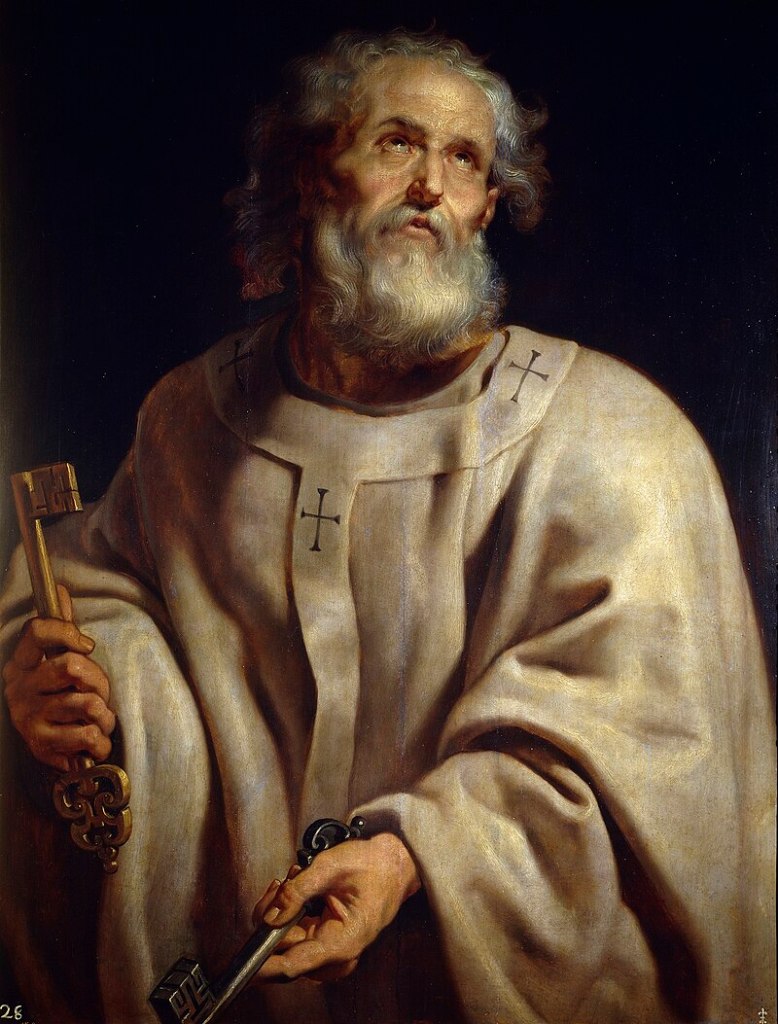
Saint Peter by Peter Paul Rubens, from his Twelve Apostles series. Peter is vested in the pallium, and holding the Keys of Heaven (1610–1612)
Spiritual Leader
The pope serves as the supreme spiritual authority for Catholics worldwide. He is regarded as the Vicar of Christ, meaning he is believed to represent Christ on Earth in a special way. Catholics believe that Jesus gave St. Peter and his successors the authority to lead the Church, a belief rooted in passages from the Bible.
“‘And I tell you, you are Peter, and on this rock I will build my church, and the powers of death shall not prevail against it.” Matthew 16:18
Supreme Authority in Doctrine and Morals
The pope has the authority to issue definitive teachings on matters of religion and morality, which are regarded binding on all Catholics. This comprises doctrine, moral ideals, and questions concerning Church activities. One of the most important aspects of this authority is the concept of papal infallibility, which states that the pope is considered incapable of error when making official teachings on faith and morals under certain conditions (for example, when speaking “ex cathedra” from the chair of St. Peter in his capacity as the Church’s supreme pastor).
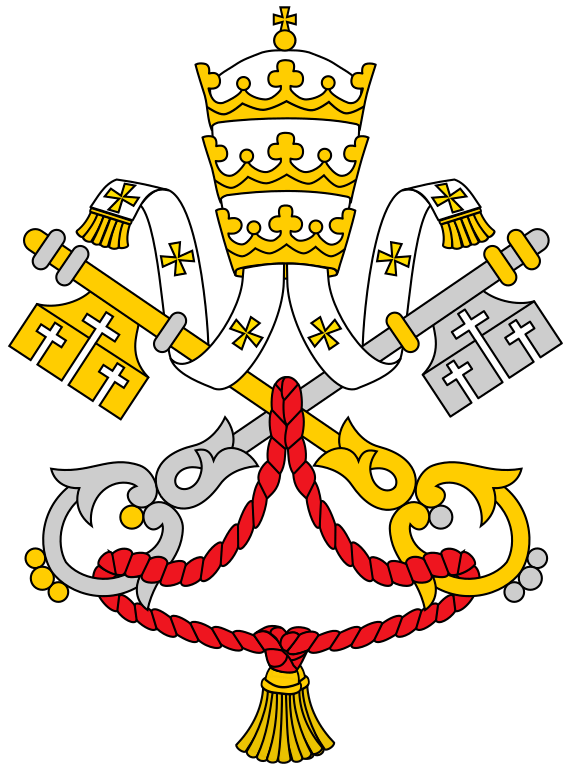
Coat of Arms of the Holy See, Vatican City
Bishop of Rome, Head of The Vatican
The pope is the bishop of Rome, a unique Catholic position. Catholic tradition holds that St. Peter was Rome’s first bishop, and his successors retain that duty. As Bishop of Rome, the pope oversees Rome’s spiritual well-being and all Catholics worldwide.
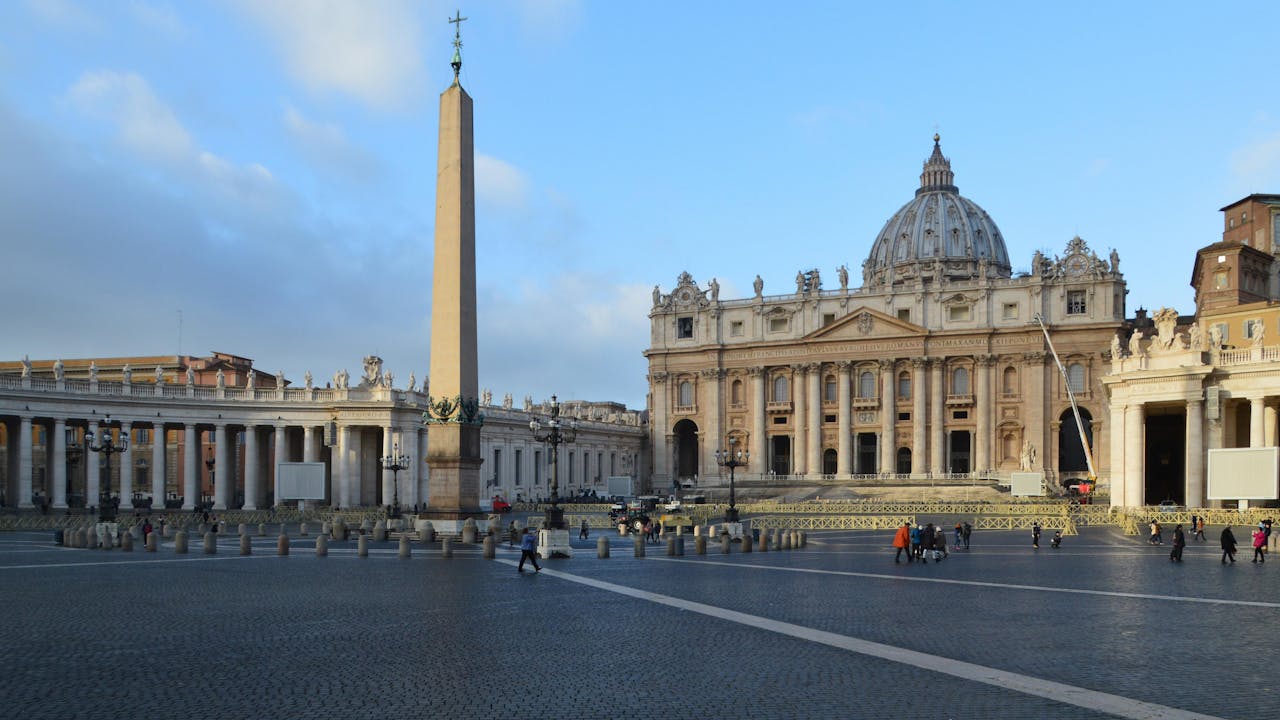
The pope rules Vatican City, a small city-state in Rome. The pope possesses ecclesiastical and political authority in the Vatican, the Catholic Church’s spiritual and administrative centre. The Vatican houses the papal residence, Church offices, and St. Peter’s Basilica.
Pope leads the Holy See, the Catholic Church’s main governing body. It has sovereignty, diplomatic relations, and worldwide presence. The Pope’s ecclesiastical authority and Vatican City’s administrative framework are often referred to as the “Holy See”.
What is The Vatican City?
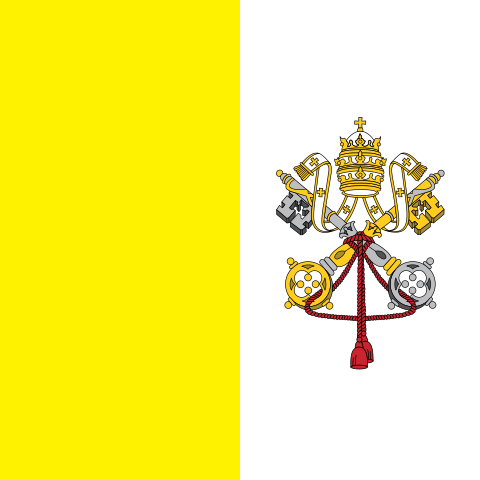
Flag of Vatican City, version since 2023
Vatican City is an independent city-state completely encircled by the city of Rome, Italy, making it the world’s smallest country. It covers approximately 44 hectares (110 acres), or 0.17 square miles, which is smaller than many huge city parks.
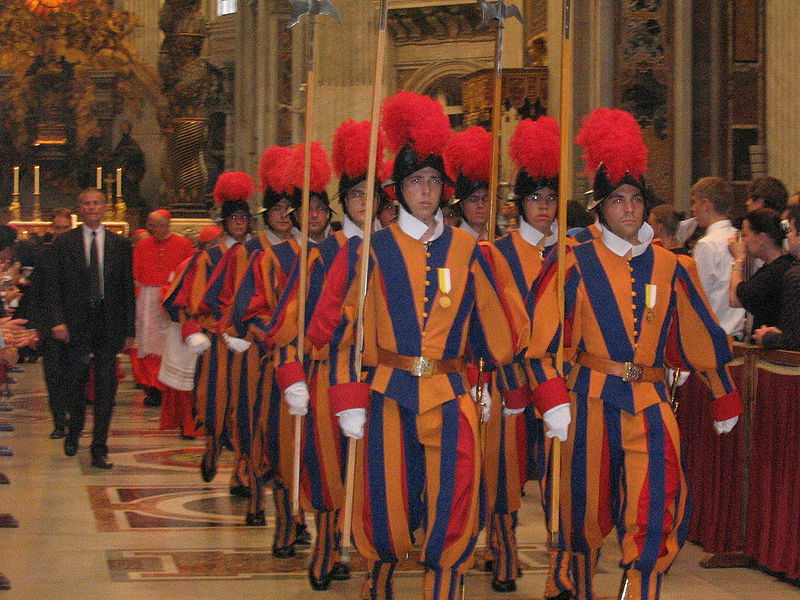
Despite its small size, it is extremely important to Catholics all over the world because it serves as the headquarters of the Catholic Church and the Pope’s official residence, as well as a fully functional country with its own government, laws, postal system, and even an army, the Swiss Guard, which protects the Pope.
The Swiss Guard are specially trained soldiers that guard the Pope and Vatican City. Their bright blue, red, yellow, and orange uniforms are said to be designed by Michelangelo during the Renaissance. The Swiss Guard is the only army in the world to wear such a colourful uniform, symbolising their commitment and history with the Vatican.
In 1506 Pope Julius II invited Swiss soldiers to protect the Vatican and Holy See, creating the Swiss Guard. This was largely because Swiss soldiers were Europe’s best and most loyal mercenaries.
Candidates have to meet strict requirements to become a member of the Swiss Guard: they must be Swiss citizens, have completed their military duty in the Swiss army, be Catholic, and be between the ages of 19 and 30. The Swiss Guards are required to be Swiss citizens due to the Catholic Church’s historical and traditional ties with the country. During the early 16th century, Switzerland maintained its neutrality and refrained from participating in European wars. The Vatican, which required protection but did not want to get involved in politics, chose the Swiss Guards because of their neutrality and reputation for independence and non-politics. The Swiss mercenaries were also known for their discipline, training, military skills, loyalty, and trustworthiness.
Official Language of The Catholic Church
Usage of Ecclesiastical Latin in the Traditional Roman Missal, a liturgical book used by the priest in the Roman Catholic Church to celebrate the Mass. It contains the prayers, hymns, and instructions needed for the celebration of the Eucharist
The official language of the Catholic Church and the Vatican is Latin. Latin has been used as the liturgical and administrative language of the Church for centuries, and it remains the primary language for official documents, including those of the Holy See and the Vatican.
However, in practice, the Vatican also uses Italian as a working language, especially for everyday communication, since it is the language of the host country, Italy. Other languages are also used for pastoral outreach and communication with the global Catholic community.
How is a Pope Chosen?
Delivery of the Keys by Pietro Perugino (1481–1482). Jesus gives St. Peter the Keys of Heaven. The painting is a fresco from the northern wall of the Sistine Chapel, a chapel in the Apostolic Palace, the pope’s official residence in Vatican City, Rome, Italy
Papal Election
The College of Cardinals, consisting of senior bishops and archbishops appointed by prior popes, is responsible for electing the pope. Upon the death or resignation of a pope, the cardinals convene in a conclave, a private assembly, to select a new pope. The election takes place via a voting process, and the selected candidate is typically a cardinal himself. Upon election, the new pope has the opportunity to select his papal name and is officially inaugurated in a public ceremony.
Papal Name
When a newly elected pope assumes the role of the papacy, he selects a papal name. It differs from the pope’s birth name and is a long-standing tradition in the Catholic Church. A Pope’s name can have significance to papal identity, expressing individual preferences and theological or historical intentions. The pope uses this to convey his position in the Church and his leadership responsibilities.
Since the Middle Ages, popes have changed their names frequently, though not all have decided to do so. The first documented occurrence was Pope John II (533-535 AD), who changed his name after being elected because his birth name, Mercurius, was thought to be too closely linked with the pagan deity Mercury.
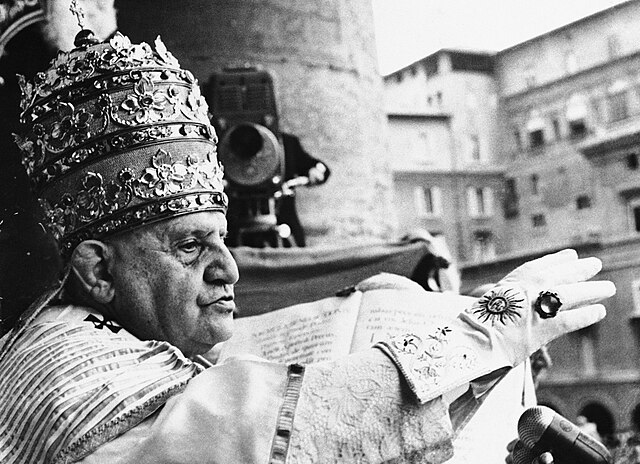
Pope John XXIII blesses the crowds after his coronation in 1958, as he wears a Papal Tiara that dates back to 1877
Papal Inauguration
A Papal Inauguration is a ceremonial procedure that marks the beginning of a new Pope’s ministry. It is a very important global event that is attended by devoted Catholics, religious leaders, heads of state and government officials, journalists, and media outlets who cover the event extensively, offering live broadcasts and reports to a worldwide audience.
Historically, Papal Coronations were practiced prior to Papal Inaugurations. During this time, new Popes were crowned with a Papal Tiara in a coronation ceremony, symbolising their authority and role within the Church. Nonetheless, Pope Paul VI was the final Pope to receive a coronation in this way in 1963. He subsequently relinquished the tiara, symbolising his humility and solidarity with the impoverished.
A papal tiara adorned with gems, at the St. Peter’s Basilica, Vatican City, Rome, Italy
In 1978, Pope John Paul I, who succeeded Paul VI, opted for a simplified ritual, focussing on the Mass of Inauguration. This change established a new precedent, and all subsequent Popes have been inaugurated rather than crowned. The Papal Inauguration focusses on the spiritual and pastoral components of the Pope’s ministry, rather than the regal symbolism of a coronation.
Pope Benedict XVI’s first trip in the Popemobile at his inauguration (2005)
Key Elements of The Papal Inauguration
Mass of Inauguration: The Pope’s first Mass is typically held in St. Peter’s Basilica or St. Peter’s Square. This is the main event of the inauguration, where the Pope celebrates the Eucharist and delivers a homily outlining his vision for the Church.
Receiving the Pallium: During the Mass, the new Pope receives the pallium, a white woollen band with six black crosses. This symbolises his role as the shepherd of the universal Church. The pallium is placed on the Pope by the senior Cardinal Deacon.
Fisherman’s Ring: The new Pope is presented with the Fisherman’s Ring, a gold signet ring with an image of St. Peter casting his net, which represents the Pope’s role as the successor of St. Peter. The ring is placed on the Pope’s finger by the Cardinal Dean.
The Fisherman’s Ring Insignia of Pope Leo XIII (1878)
Liturgical Investiture: The Pope also receives the Book of the Gospels, symbolising his duty to proclaim the word of God. This is accompanied by other liturgical symbols such as the papal staff.
First Blessing: After the Mass, the new Pope appears on the balcony of St. Peter’s Basilica to give his first “Urbi et Orbi” blessing, which means “to the city and the world.” This blessing is a significant moment, as it is the new Pope’s first official act of blessing the faithful.
Homage of the Cardinals: After the Mass, the Cardinals pay homage to the new Pope, pledging their obedience and support.
Pope John Paul II(1991)
Role in Global Catholicism
The pope provides leadership and guidance to the worldwide Catholic community, including through the appointment of bishops and cardinals, who assist him in overseeing the Church. The pope also plays a key role in fostering relations with other Christian denominations, world religions, and secular governments.
St. John Paul II exemplified this by travelling extensively to foster understanding among countries and religions. He advocated against political oppression, violence, and materialism. He is recognised with helping to bring communism to an end in his home country of Poland and throughout Europe.
Church Hierarchical Structure
The Catholic Church’s hierarchical structure is an organisational system that establishes authority and oversight within the church and features a clear chain of command with varying degrees of responsibility.
Since its inception over two thousand years ago, the Catholic Church has solely appointed men to these positions for religious and theological reasons. This stems from the principles of Apostolic Succession and Sacramental Theology, which maintain that the power of bishops originates from Jesus Christ’s selection of only male apostles, alongside a theological understanding of the sacramental essence of the priesthood. As a result, the Catholic Church asserts that only men are eligible for valid priest ordination.
Below are the following ranks within the church hierarchy from highest to lowest:
Ordination: The Pope is elected by the College of Cardinals and then formally takes office following a Papal Inauguration ceremony.
Role: The Pope is the Bishop of Rome and the leader of the worldwide Catholic Church. He holds supreme authority in matters of faith, morals, and church governance. The Pope is also considered the spiritual successor to St. Peter, the Apostle.
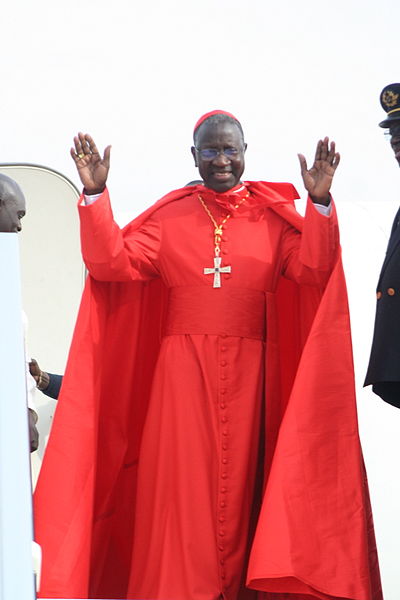
Théodore-Adrien Sarr became a cardinal from Senegal, for the Catholic Church in 2019
2. Cardinal
Role: Cardinals are senior church officials who are appointed by the Pope. They serve as advisors to the Pope and are the ones who elect a new Pope in a conclave. Many cardinals are also archbishops or heads of important dioceses or departments within the Vatican.
Ordination: Cardinals are chosen from among bishops and sometimes priests, though typically they are bishops.
Catholic Archbishops
3. Archbishop
Role: Archbishops are bishops who oversee archdioceses, which are typically larger or more significant dioceses. They have additional responsibilities, such as presiding over meetings of other bishops in their region.
Ordination: Archbishops are usually appointed from among the existing bishops and receive the pallium from the Pope as a symbol of their authority.
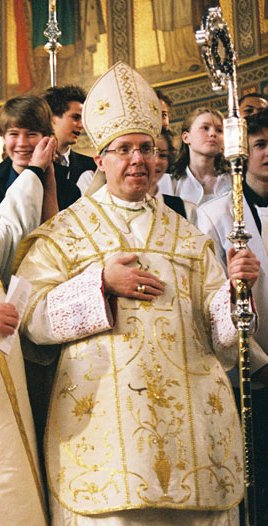
Bishop Czeslaw Kozon, the Catholic bishop of Copenhagen, Denmark, since 1995, in pontifical liturgical vestments
4. Bishop
Role: Bishops hold the fullness of the Sacrament of Holy Orders and have the authority to ordain deacons and priests. They oversee dioceses (regional church jurisdictions) and are responsible for the spiritual and administrative well-being of their dioceses. Bishops can also confirm and sometimes perform sacraments that are normally performed by priests.
Ordination: Bishops are consecrated by at least three other bishops, ensuring apostolic succession.
First native Catholic priest in the Belgian Congo. Early 1900s
5. Priest
Role: Priests are responsible for leading congregations, administering the sacraments (such as the Eucharist, confession, and anointing of the sick), and providing pastoral care. They serve as the primary ministers of the Mass.
Ordination: Priests are also ordained by a bishop. They typically serve in parishes under the authority of a bishop.
A Catholic deacon
6. Deacon
Role: Deacons assist priests and bishops. They can perform baptisms, witness marriages, conduct funerals, and preach. There are two types of deacons: transitional deacons (who are on the path to becoming priests) and permanent deacons (who may remain in this role for life and can be married if they were married before ordination).
Ordination: Deacons are ordained by a bishop through the Sacrament of Holy Orders.
Non-Hierarchical Catholic Religious Orders
Non-hierarchical religious orders are communities of men or women who live a religious life without being structured in a hierarchical governance system like that found in the clergy who work within the Catholic Church (e.g., bishops, priests, the Pope etc). In these orders, members often share a common mission and live according to specific rules or charisms but do not have the same level of ecclesiastical authority.
Nuns and Sisters
Nuns and Sisters are both women who belong to religious communities within the Catholic Church, but they are two distinct groups as they have different roles and lifestyles:
Nuns of the Convent of the Sacred Heart in Rome, Italy singing at the Organ (1849)
Nuns
Female equivalent to Monks
Lifestyle: Nuns typically live a cloistered or contemplative life, often in monasteries. They focus on prayer, meditation, and community life.
Vows: Nuns take solemn vows of poverty, chastity, and obedience, committing themselves to a life of devotion and separation from the secular world.
Activities: Their primary activities revolve around prayer and contemplation, although some may engage in limited-service work.
Clothing: A Nun wears a habit at all times. The design of the habit varies depending on the religious community.
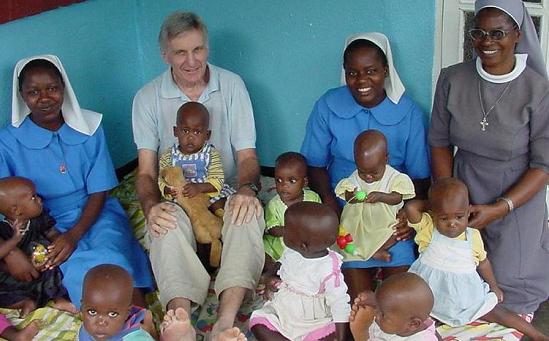
Lifestyle: Sisters usually live an active life, engaging directly with the world. They often work in ministries such as education, healthcare, social services, and pastoral care.
Vows: Sisters also take vows of poverty, chastity, and obedience, but their focus is more on active service rather than cloistered life.
Community: Sisters often live in convents or houses associated with their religious order. These can be located in urban or rural areas and are designed for communal living.
Clothing: A sister can choose whether or not to wear a habit. The design of the habit varies depending on the religious community.
Monks and Brothers
Monks and Brothers are both men who belong to religious communities within the Catholic Church, but they are two distinct groups as they have different roles and lifestyles:
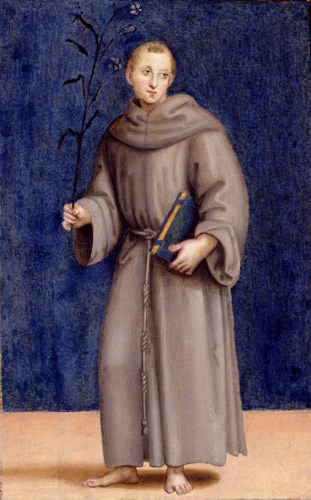
St. Anthony of Padua wearing a monk’s habit by Raphael, Dulwich Picture Gallery, London, England, United Kingdom (1503)
Monks
Male equivalent to Nuns
Lifestyle: Monks typically live in monasteries and lead a contemplative life focused on prayer, meditation, and community living. Their daily routine often centres around communal worship and personal reflection.
Vows: Monks take solemn vows of poverty, chastity, and obedience, often following a specific monastic rule.
Isolation: They generally have a more enclosed lifestyle, separating themselves from the secular world to focus on their spiritual journey.
Clothing: A monk wears a habit at all times. The design of the habit varies depending on the religious community.
Brothers
Male equivalent to religious Sisters
Lifestyle: Brothers usually live an active life, engaging directly with the world. They often work in ministries such as education, healthcare, social services, and pastoral care.
Vows: Brothers also take vows of poverty, chastity, and obedience, but their focus is more on active service rather than cloistered life.
Community: Brothers often live in monasteries or houses associated with their religious order. These can be located in urban or rural areas and are designed for communal living.
Clothing: A brother can choose whether or not to wear a habit. The design of the habit varies depending on the religious community.
Jesuits (The Society of Jesus)
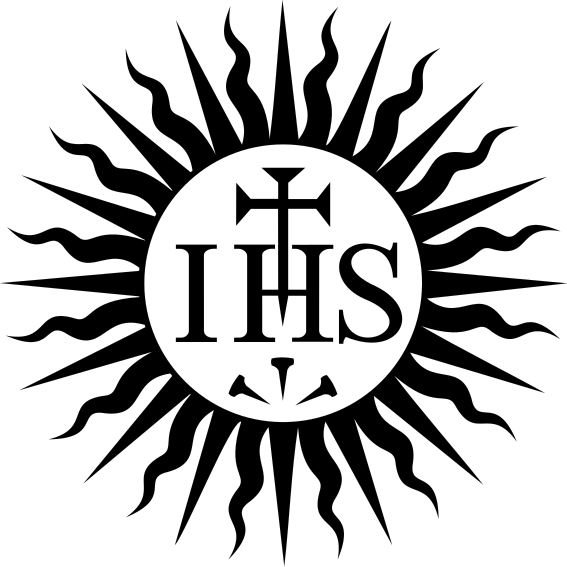
IHS emblem of the Jesuits. The design of the emblem is attributed to Ignatius of Loyola (1541)
The Jesuits (formally known as The Society of Jesus),are a religious order of pontifical right for men in the Catholic Church, based in Rome, Italy. Founded in 1540 by Ignatius of Loyola with six associates, with Pope Paul III’s consent. The society is involved in evangelism and apostolic work in 112 countries. Jesuits engage in education, research, and cultural activities. Jesuits offer retreats, serve in hospitals and parishes, support social and humanitarian causes, and encourage ecumenical dialogue.
Key Aspects of the Jesuits:
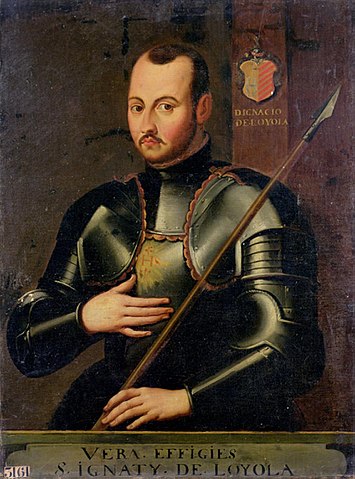
Ignatius in his armour, in a 16th-century painting. The Jesuits (The Society of Jesus) was founded by St. Ignatius of Loyola in 1534
1. Mission and Values
Education: Jesuits are known for their emphasis on education and operate many schools, colleges, and universities around the world.
Social Justice: They focus on serving the marginalised and advocating for social justice, often working in communities to address issues like poverty and inequality.
Spirituality: The order promotes a spirituality based on the discernment of God’s will, often using the Spiritual Exercises developed by St. Ignatius.
2. Vows
Jesuits take the traditional vows of poverty, chastity, and obedience, along with a special vow of obedience to the pope regarding mission work.
3. Global Reach
The Society of Jesus has a global presence, with members (Jesuits) serving in various ministries, including education, pastoral work, and missionary efforts.
4. Formation
Jesuit formation involves extensive education and training, including philosophy and theology, and emphasizes personal spiritual development.
5. Influence
Jesuits have had a significant impact on the Church and society through their work in education, theology, and social issues. They have been involved in the Counter-Reformation and played key roles in various cultural and intellectual movements.