
List of Saints


What is a Saint?

A saint is someone the Catholic Church has officially recognised as having lived a life of exceptional holiness and virtue. Saints are often honoured for their exemplary faith, moral character, and their impact on the Church and society. They are believed to be in heaven and can intercede for those who pray to them.
The Roman Catholic Church recognises over 10,000 saints, with canonisation being the formal process to declare someone a saint after their death, following an investigation of their life and miracles. Saints have designated feast days for annual celebrations.
A Catholic saint is someone who:
- Lived a life of heroic virtue: This means they led an exemplary life, demonstrating the cardinal virtues (prudence, justice, temperance, and courage) and theological virtues (faith, hope, and charity) to an extraordinary degree.
- Has a reputation for holiness: Saints are known for their deep devotion to God, their love for others, and their commitment to living according to the Gospel.
- Is believed to be in heaven: Catholics believe that saints are now in heaven, where they intercede on behalf of the faithful, praying for them before God.
- May have performed miracles: While not always required, saints often have a record of miracles attributed to them, especially posthumous miracles, which are considered signs of God’s approval of their life.
How Does Someone Become a Catholic Saint?
The process of canonisation is a formal procedure used by the Catholic Church to declare someone a saint. It typically occurs after the person has passed away and is generally a lengthy process involving several stages:
- Servant of God:
The first stage of canonisation begins when the person has died, and their life of holiness is recognised by the local Church. A bishop (or sometimes a group of bishops) investigates the person’s life to determine if they led a life of virtue. If they were a candidate for sainthood, the cause for their canonisation is formally opened, and the person is given the title of Servant of God. This includes gathering documentation, witness testimonies, and writings to assess their virtue and impact on the faith. - Venerable:
Once the Vatican’s Congregation for the Causes of Saints examines the person’s life and determines they lived a life of heroic virtue (meaning they lived the Christian virtues to an extraordinary degree), the person is declared Venerable by the Pope. This means that the Church officially recognises their virtue, but they are not yet considered a saint. - Beatification:
The next step is beatification, where the person is declared “Blessed” by the Church. To be beatified, there must be evidence of a miracle attributed to the person’s intercession (i.e., God performing a miracle through the person’s prayers after their death). In certain cases of martyrdom (when someone is killed for their faith), a miracle is not required for beatification. Once beatified, the person can be publicly venerated and honoured, but they are not yet a universal saint for the entire Church. Beatification is often a local or regional celebration. - Canonisation:
Finally, canonisation is the formal declaration that the person is a saint. This stage occurs after at least one additional miracle (in most cases) is attributed to their intercession after their beatification. A miracle is typically considered a sign of divine confirmation that the person is in heaven, interceding for the faithful. Canonisation is the final step in the process and means that the person is recognised as a saint by the universal Church, and their feast day can be celebrated throughout the world.
Key Aspects of Canonisation

Canonisation of Martyrs
In the case of martyrs, who were killed for their faith, the process is often quicker because their deaths are seen as a sign of their holiness. For martyrs, the Church may proceed directly to beatification, and canonisation can follow soon after.
The Role of Miracles in Canonisation
Miracles play an important role in the canonisation process, especially in the later stages. A miracle is typically defined as an event that cannot be explained by natural causes and is seen as a sign of God’s intervention.
After the person’s beatification, a miracle must be verified and confirmed by a thorough investigation to ensure it was due to the person’s intercession.
Miracles can involve physical healing, such as the cure of an incurable disease, or other events seen as extraordinary and inexplicable through natural means.
What Happens After Canonisation?
Once canonised, the saint is officially recognised by the Church and can be venerated in the liturgy with a feast day and prayers. Catholics believe that saints in heaven intercede for the faithful on earth, meaning they pray for us and can be invoked for guidance and help. The saints are also seen as models of holiness and virtue.
Feast Days Within Western and Eastern Churches
The Western and Eastern Churches, which include the Roman Catholic Church and the Eastern Orthodox Church, often celebrate saints on different feast days due to differences in liturgical calendars and traditions.
These differences stem from the historical split between the two branches of Christianity, notably after the Great Schism of 1054 AD. While both churches honour the same saints, their calendars are not identical.
The Western Church typically uses the Gregorian calendar, introduced in 1582 AD, while the Eastern Church uses the Julian calendar, which is currently 13 days behind the Gregorian calendar. Consequently, the use of different calendars can lead to variations in the liturgical observances of saints’ feast days between the two traditions.
All Saints and History of Canonisation

The solemnity of All Saints is celebrated in the Western Church on the 1st of November every year. This feast celebrates those who, having lived lives of virtue, died in the state of grave and have been granted the reward of eternal life by God. From time-to-time solemn declaration is made by the pope that a deceased member of the faithful may be venerated as a saint. This solemn declaration is called ‘canonisation’. In the history of the Church the process of declaring someone a saint has gone through two distinct phases:
The first phase of this process lasted until 993 AD. During this phase there was no “official” process of declaring someone a saint. The term “saint” was applied informally to holy men and women, and these “saints” were canonised – not by Rome – but rather “in the minds and hearts of the faithful”. This early practice followed the usage of the term “saints” in Scripture where it designates the faithful. It is also worth bearing in mind that a “saint” is anyone who has been gifted with the beatific vison in Heaven. Many early saints have never been “formally” canonised.
The second phase of the canonisation process began in the 900s, when the church in Rome demanded that all saint throughout her jurisdiction be added to an official list (“canon”) which would be kept in Rome. The first saint to be added to the official list was St. Ulrich of Augsburg, who was canonised in 993 AD. Since the 900s the process has become a detailed study of the life, writings, and after-life (miracles) of the candidate. The process involved several steps, including beatification, and the last is canonisation.
Sometimes the question is posed as to whether there are any “Irish saints that the Roman Catholic Church does not recognise”. In echoing what was stated above the answer to such a question comes in two parts:
Before the year 993 AD all Irish saints, in common with other saints worldwide, were not officially canonised by Rome. This includes the vast majority of Irish saints. St. Patrick, St. Colmcille and St. Brigid are in this earlier group of “non-canonised” saints. This does not mean, however that they are not saints. They were “canonised” in the minds and hearts of the faithful and many of these earlier saints are included in the liturgical calendar of the church.
5 Officially Canonised Irish Saints
Since the year 993 AD only five Irish saints have been officially added to the canon i.e. canonised. The Detail of the five are as follows:
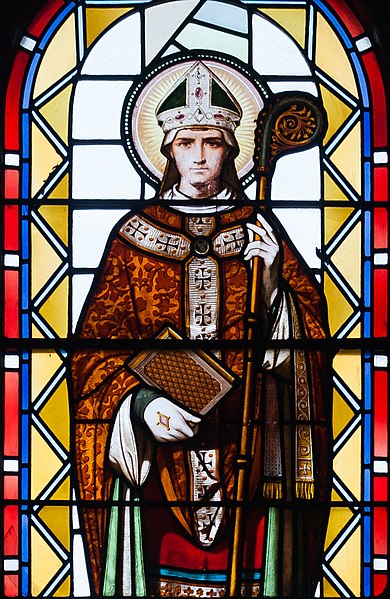
St. Malachy
Malachy was born in County Armagh in ancient Ireland (now Northern Ireland). He became a priest and later Archbishop of Armagh, working tirelessly to restore discipline, establish proper liturgical practices, and reform monastic life.
People credit him with introducing the Cistercian order to Ireland and fostering strong ties with Rome. Saint Malachy is also known for his deep spirituality, humility, and devotion to the poor. A notable tradition associated with him is the “Prophecy of the Popes,” a series of cryptic phrases attributed to him that some believe predict the succession of future popes, though its origins are debated.
Born: 1094 AD
Died: 1148 AD (aged 54)
Feast Day: 3rd of November
Canonised: 1190 AD by Pope Clement III
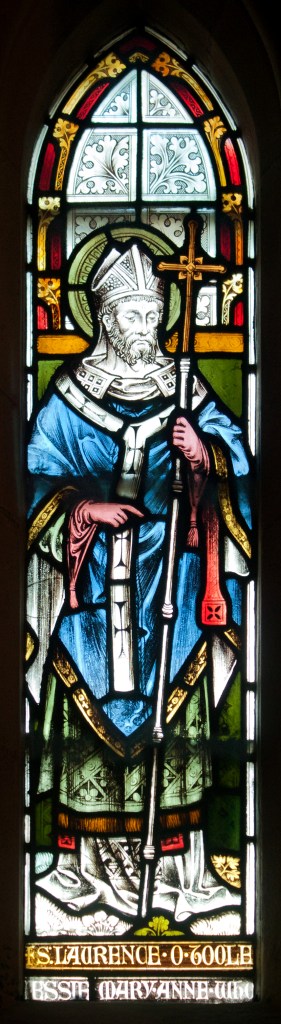
St. Lawrence O’Toole (Lorcán Ua Tuathail)
Saint Laurence O’Toole was born in Kilkea, County Kildare, to a noble family. At 10 years of age, he was taken hostage by the forces of Diarmait Mac Murchada, the King of Leinster, who had a conflict with Laurence’s father. Laurence was held in captivity for several years before being released, and during his time in captivity, he was educated in a monastic setting, which influenced his later religious life.
He was known for his commitment to peace and reconciliation, working to bridge the divide between the Irish and the Anglo-Norman settlers. Saint-Laurence also emphasised reforming the clergy and improving the spiritual lives of his people. He died while travelling to France on a diplomatic mission. People remember him as a model of humility, piety, and dedication to his faith.
Born: 1128AD
Died: 1180 AD (aged 52)
Feast Day: 11th of December
Canonised: 1225 AD by Pope Honorius III
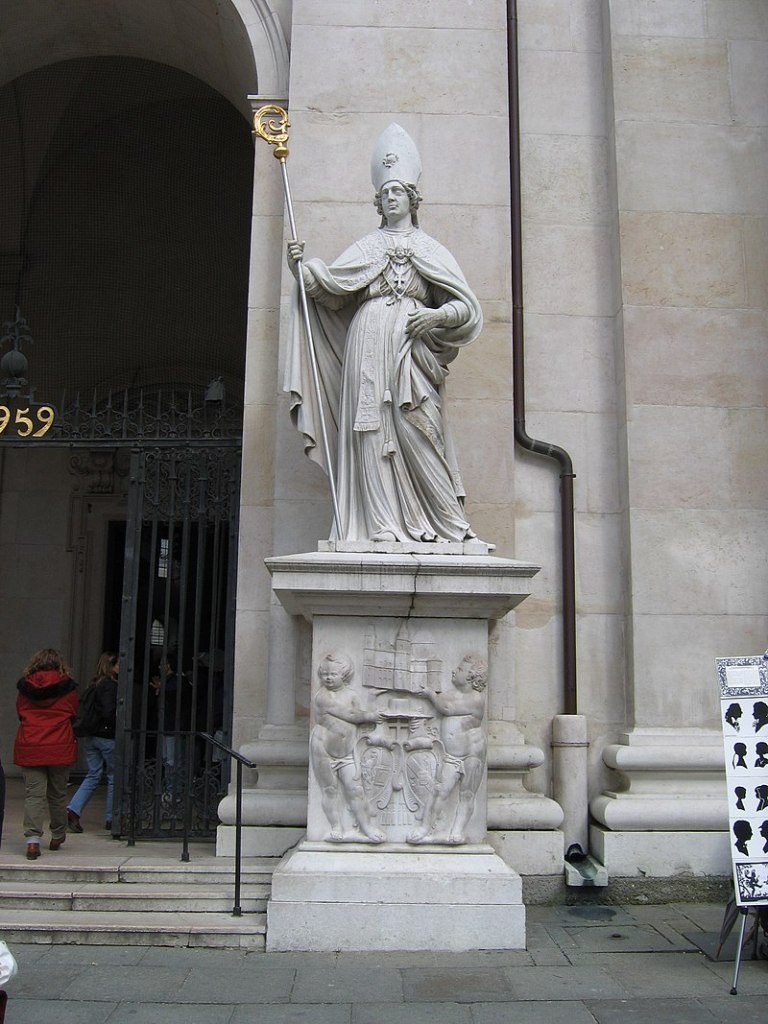
St. Virgil (Fergal) of Salzburg
Born in Ireland, a centre of learning at the time, Virgil travelled to Francia (modern-day France and Germany) and eventually settled in Salzburg, Austria. As the Abbot of St. Peter’s Monastery and later the Bishop of Salzburg, he worked tirelessly to evangelize the Alpine regions and establish churches.
Virgil was also renowned for his scholarly interests, particularly in astronomy and geography, and is credited with proposing the idea that the Earth is spherical, which was controversial at the time. Despite theological disputes with figures like Saint Boniface, Virgil remained steadfast in his mission and was revered for his wisdom and dedication.
Born: 700 AD
Died: 784 AD (aged 84)
Feast Day: 27th of November
Canonised: 1233 AD by Pope Gregory IX
St. Oliver Plunket
Oliver Plunkett, born in Loughcrew Cairns, County Meath, Ireland, in 1625, was the last man to be a victim of the Popish Plot and to suffer martyrdom for the Catholic faith in England. The remains of his head are rested in its reliquary in St. Peter’s Church in the city of Drogheda in County Louth. He was beatified in 1920 and canonised in 1975, thus becoming the first new Irish saint in almost seven hundred years.
Born: 1625 AD
Died: 1681 AD (aged 55)
Feast Day: 1st of July
Canonised: 1975 AD by Pope Paul VI
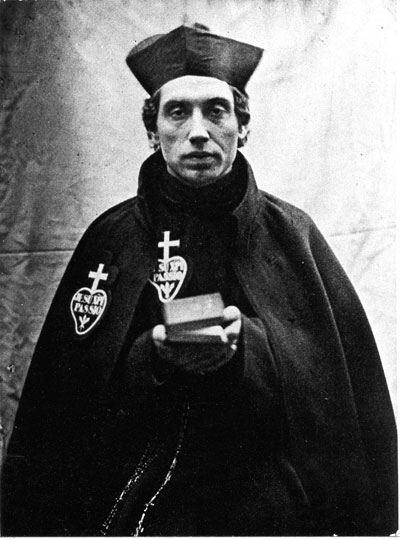
Charles of Mount Argus (Charles Houben of St Andrew)
Saint Charles of Mount Argus (1821–1893 AD), born John Andrew Houben in the Netherlands, was a Passionist priest known for his holiness, compassion, and gift of healing. In 1857 AD, he was sent to Dublin, Ireland, where he served at the Passionist monastery at Mount Argus, where he remained for the rest of his life in Ireland.
Saint Charles became beloved for his deep humility, kindness, and special ability to bring comfort to the sick and suffering, often through his prayers and blessings. People flocked to him from all over Ireland, believing in his miraculous intercessions. His reputation for healings and miracles was so great at the time that a reference is made to him in the famous novel Ulysses by James Joyce. Despite his growing reputation, he remained modest and dedicated to his mission of serving God and others.
Born: 1821 AD
Died: 1893 AD (aged 71)
Feast Day: 5th of January
Canonised: 2007 by Pope Benedict XVI
Apart from the above, 26 Irish people have been beatified by the Church and 9 others have their causes for beatification active.

