

Mary and Joseph are critical Christian figures and are recognised as the parents of Jesus Christ. As described in the New Testament, Mary was a young woman who received a visit from the Angel Gabriel, informing her that she would conceive Jesus through the Holy Spirit, making her a virgin mother.
Joseph, her spouse, was a carpenter who cared for Mary and Jesus, providing support and protection throughout their journey, especially during events like their escape to Egypt to avoid King Herod’s decree, which involved a plot to kill Jesus as an infant.
Together, they hold an essential place in the nativity story, symbolising faith, obedience, and the significance of family in Christian teachings.
Mary the Mother of Jesus
Born: 18 BC
Died: After 33 AD
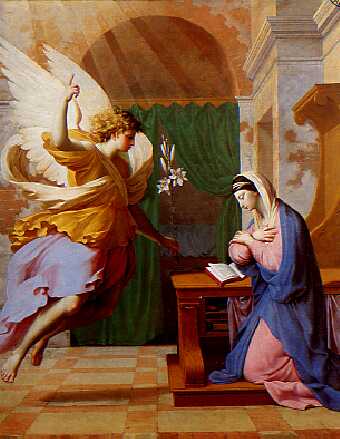
Mary is Joseph’s wife and holds significant importance within Christianity, being honoured as the mother of Jesus Christ. The Roman Catholic Church teaches that Mary was conceived without original sin, meaning that from the moment of her conception, God protected her from the sinful nature that affects all humans. This doctrine is known as the Immaculate Conception, emphasising Mary’s purity and holiness, thus preparing her to be the vessel for the incarnation of Jesus Christ.
As a young woman, she was visited by the Angel Gabriel, who announced that she would conceive Jesus through the Holy Spirit, resulting in a miraculous virgin birth known as the Annunciation. Mary is frequently depicted as a symbol of purity, obedience, and maternal affection, serving as the focus for numerous prayers and devotions. Her life and significance are vital in the New Testament and Christian traditions.
“In the sixth month the angel Gabriel was sent from God to a city of Galilee named Nazareth, to a virgin betrothed to a man whose name was Joseph, of the house of David; and the virgin’s name was Mary. And he came to her and said, “Hail, full of grace, the Lord is with you!”
Luke 1:26-28
The Many Titles of Mary
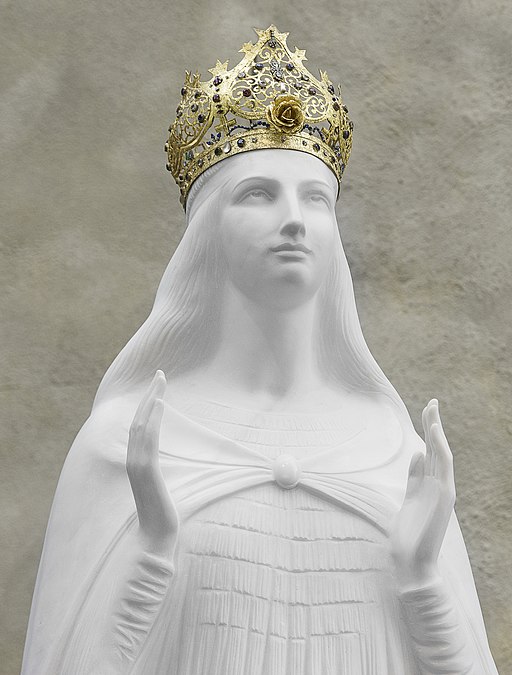
Depending on the cultural context and the areas where she is thought to have shown herself to people (known as Marian apparitions), she is honoured under different names, including:
- Blessed Mother
- Blessed Virgin
- Crowned Virgin
- Immaculate Conception
- Madonna (Italy)
- Mary, Seat of Wisdom
- Mediatrix of All Graces
- Mother of God – Theotokos (Eastern Europe)
- Mother of the Church
- Our Lady of Fatima (Portugal)
- Our Lady of Guadalupe (Mexico)
- Our Lady of Knock (Ireland)
- Our Lady of Lourdes (France)
- Our Lady of Perpetual Help
- Our Lady of Sorrows
- Queen of Angels
- Queen of Heaven
- Star of the Sea – Stella Maris
- Virgin Most Powerful
Marian Feast Days

The Virgin Mary is honoured as a saint in the Catholic Church. She holds a unique and exalted position as the Mother of God and is revered for her role in the life of Jesus and her embodiment of faith and obedience to God’s will. While she is not canonised in the same manner as other saints because she is already regarded as holy, she is highly revered in the Catholic tradition, with numerous feast days, known as Marian feast days, dedicated to her. Mary is seen as a powerful intercessor for believers and is central to many prayers and devotions within the Church.
Feast Days
Feast of the Annunciation – 25th of March
Marks the announcement by the Angel Gabriel to Mary that she would conceive Jesus.
Feast of the Visitation – 31st of May
Celebrates Mary’s visit to her cousin Elizabeth, who was pregnant with John the Baptist, who would later baptise Jesus Christ.
Feast of the Assumption – 15th of August
Commemorates Mary’s bodily assumption into heaven at the end of her earthly life.
Feast of the Nativity of the Blessed Virgin Mary – 8th of September
Celebrates the birth of Mary.
Feast of Our Lady of Sorrows – 15th of September
Reflects on Mary’s suffering during the Passion of Jesus.
Feast of Our Lady of the Rosary – 7th of October
Honors Mary and the significance of the Rosary in prayer.
Feast of the Immaculate Conception – 8th of December
Celebrates the belief that Mary was conceived without original sin.
Joseph the Adoptive Father of Jesus

Born: Year of birth and death unknown.
Joseph was a carpenter residing in Nazareth and is Mary’s husband, who was discovered pregnant by the Holy Spirit. At first, Joseph was distressed by this revelation and contemplated quietly divorcing her to spare her from embarrassment. However, an angel of the Lord came to him in a dream, comforting him and telling him not to fear taking Mary as his wife because the Holy Spirit was the one who conceived her child. The angel informed Joseph that the child was to be named Jesus, as he would deliver his people from their sins.
Following the angel’s instructions, Joseph married Mary. When Jesus was born, he named him as directed. As a committed father, Joseph played a vital role in Jesus’ early years. After the Magi visited and presented gifts, Joseph received another warning in a dream that King Herod intended to kill Jesus. Acting quickly, he took Mary and Jesus to Egypt to evade Herod’s infanticide. They stayed in Egypt until it was safe to return to Judaea as instructed in another dream. Upon returning, they settled in Nazareth, where Joseph resumed his work as a carpenter.
“Now when they had departed, behold, an angel of the Lord appeared to Joseph in a dream and said, “Rise, take the child and his mother, and flee to Egypt, and remain there till I tell you; for Herod is about to search for the child, to destroy him.” And he rose and took the child and his mother by night, and departed to Egypt, and remained there until the death of Herod. This was to fulfil what the Lord had spoken by the prophet, “Out of Egypt have I called my son.”
Matthew 2: 13-15
Saint Joseph
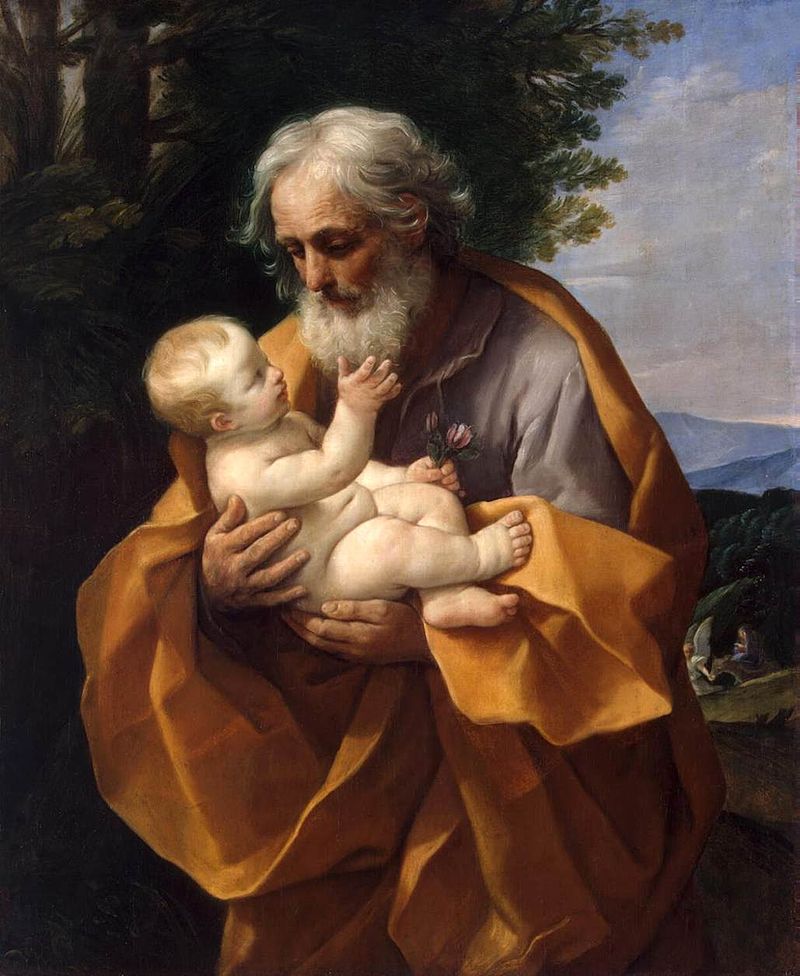
Joseph holds a significant role in the Roman Catholic Church, especially as the patron saint of the universal Church, workers, and fathers. Nonetheless, while he is a noteworthy figure, he is not regarded as the principal saint of the Church. The Virgin Mary, often called the Mother of the Church, occupies a distinct and central place in Catholic belief and reverence. Joseph’s importance arises from his position as Jesus’ earthly father and his model of faith, earning him reverence in Catholic customs. His feast day is observed on the 19th of March.
Feast Days
Feast of St. Joseph, Husband of Mary – 19th of March
Honours his role as the husband of the Virgin Mary and the earthly father of Jesus.
Feast of St. Joseph the Worker– 1st of May
Honours St. Joseph as the patron of workers. It emphasizes his role as a humble carpenter and model for all who work, as well as his dedication to providing for his family
Joseph’s Unknown Fate
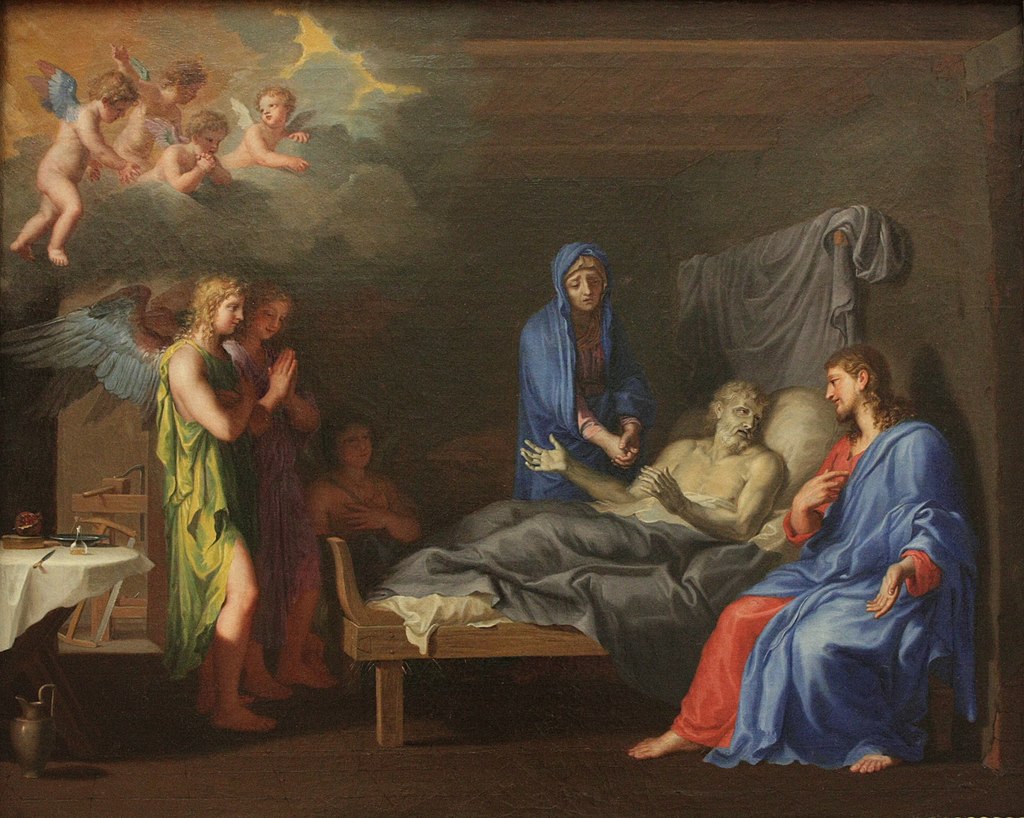
There is limited information about Joseph as he does not speak and is not mentioned after a certain point in the New Testament. This has puzzled many scholars and theologians, leading to speculation about his fate.
The Catholic Church teaches that the details of Saint Joseph’s death are not specifically recorded in the Scriptures or early Christian writings. However, it is traditionally believed that Joseph died before Jesus began His public ministry. This is inferred from the absence of Joseph in the New Testament accounts of Jesus’ adult life.
The cultural and historical context of the time may have also played a role in the limited mention of Joseph, as the texts primarily aimed to convey theological messages rather than provide comprehensive biographies. Nevertheless, he is remembered for his faithfulness, protective nature, and role in Jesus’ upbringing. Joseph’s story emphasises themes of obedience, trust in God, and the importance of family.
The Nativity Story

The Nativity, Advent, and Christmas are critical aspects of the Christian celebration of Jesus Christ’s birth. The Nativity refers explicitly to Jesus’ birth on December 25th, symbolising God’s incarnation. Advent is the four weeks before Christmas, focused on preparation and reflection on Christ’s coming through prayer and traditions like the Advent wreath. Together, Advent sets the stage for Christmas, celebrating the fulfilment of God’s promise to send a Savior. The term “Nativity” is linked to the birth of Jesus as described in the Gospels of Matthew and Luke.
The narrative begins with the announcement of the angel Gabriel to Mary, a young virgin living in Nazareth. Gabriel informs her that she will conceive a child by the Holy Spirit and that this child will be the Son of God. Although initially troubled, Mary accepts this divine message with faith.
Joseph the husband of Mary, learns of her pregnancy and considers the possibility of a quiet divorce to protect her from shame. However, an angel appears to Joseph in a dream, reassuring him that the child was conceived through the Holy Spirit and urging him to remain with Mary, serve as the child’s earthly father and name Him Jesus.
Mary and Joseph journeyed to Bethlehem, Joseph’s family hometown, in response to an order for a census by Roman emperor Caesar Augustus. Because of the large number of visitors, they are unable to secure lodging at the inn, which results in their staying in a stable where the animals are housed. Mary delivers Jesus, wraps him, and lays him in a manger.
An angel appeared to shepherds and called them to celebrate the birth of Jesus and said they would find the baby wrapped in swaddling clothes and lying in a manger. The shepherds then went to Bethlehem to see the newborn Jesus and share the joyous message they had received.
Meanwhile, the Three Wise Men (Kings or Magi) followed a star to find the newborn king. They came bearing gifts of gold, frankincense, and myrrh, symbolising Jesus’ royal status and divine essence. After their visit, an angel appeared to Joseph in a dream, advising him to flee to Egypt with Mary and Jesus to escape King Herod’s decree to kill all male infants in Bethlehem, as he was threatened by the news from Three Wise Men regarding the prophecy of the Messiah’s birth. Reacting swiftly, Joseph took Mary and Jesus to Egypt to avoid Herod’s fury and remained there until it was safe to return to Judaea, as revealed in another dream.

