
1. Jesus’ Birth
The birth of Jesus is traditionally celebrated on the 25th of December, Christmas. It is believed to have occurred in the town of Bethlehem, located in the region of Judaea, in the Roman Empire, around 6-4 BC. Jesus’ birth is described as a miraculous event, with his mother, Mary, a young virgin, conceiving him through the Holy Spirit.

The Annunciation
The story begins with the Annunciation, when the Archangel Gabriel appeared to Mary, a young woman betrothed to Joseph, a carpenter. Gabriel told Mary that she had been chosen to conceive the Son of God through the Holy Spirit. Mary, though initially confused, accepted the message with humility, saying “Let it be done to me according to your word”.
“In the sixth month the angel Gabriel was sent from God to a city of Galilee named Nazareth, to a virgin betrothed to a man whose name was Joseph, of the house of David; and the virgin’s name was Mary. And he came to her and said, “Hail, full of grace, the Lord is with you!”
Luke 1:26-28
Journey to Bethlehem
Mary and Joseph, being from Nazareth, had to travel to Bethlehem due to a census decreed by the Roman emperor Caesar Augustus. Upon arriving in Bethlehem, they found no room in the inn, and Mary gave birth to Jesus in a manger (a feeding trough for animals), a humble setting that emphasised Jesus’ modest beginnings.
The Nativity Scene
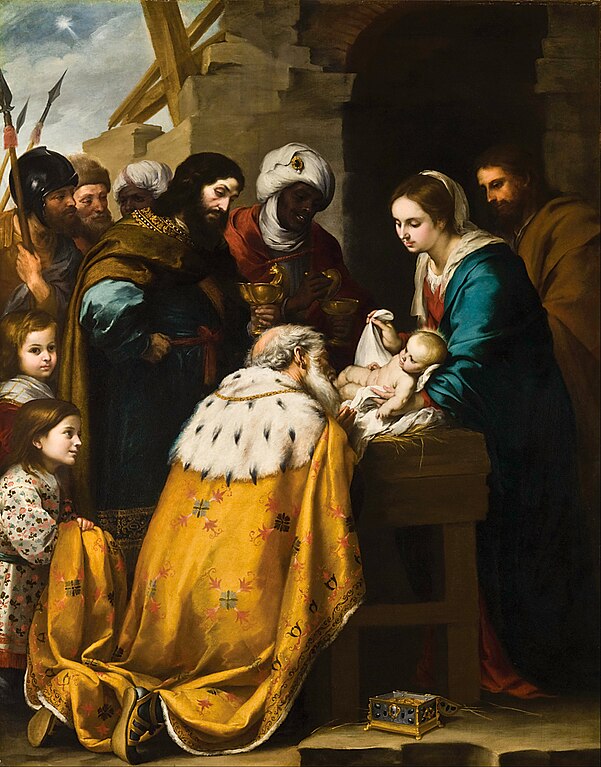
At the time of Jesus’ birth, angels appeared to shepherds in nearby fields and announced the good news. The shepherds then visited the newborn Jesus, recognising Him as the Messiah. Later, wise men (Kings or Magi) from the East, following a star, brought gifts of gold, frankincense, and myrrh, acknowledging Jesus as King and Saviour.
The Flight to Egypt
After the visit of the Three Wise Kings, King Herod, fearing the rise of a new king, ordered the massacre of all male children in Bethlehem under the age of two. To protect Jesus, an angel appeared to Joseph in a dream, urging him to take Mary and Jesus to Egypt, where they stayed until Herod’s death.
“When they saw the star, they rejoiced exceedingly with great joy; and going into the house they saw the child with Mary his mother, and they fell down and worshiped him. Then, opening their treasures, they offered him gifts, gold and frankincense and myrrh.”
Matthew 2:10-11
2. Jesus‘ Early Life

Return to Nazareth
Once Herod died, Joseph received another angelic message telling him it was safe to return to Israel. They settled in the town of Nazareth in Galilee, where Jesus grew up. This is why Jesus is often called “Jesus of Nazareth.”
“And he rose and took the child and his mother by night, and departed to Egypt, and remained there until the death of Herod. This was to fulfil what the Lord had spoken by the prophet, “Out of Egypt have I called my son.”
Matthew 2:14-15

The Childhood of Jesus
The Bible provides only a brief glimpse into Jesus’ childhood. At the age of twelve, during a trip to Jerusalem for the Passover festival, Jesus stayed behind in the Temple. When His parents found Him, He was discussing matters of faith with the temple teachers, astonishing them with His understanding. This event foreshadowed His divine wisdom and mission.
“And when they saw him they were astonished; and his mother said to him, “Son, why have you treated us so? Behold, your father and I have been looking for you anxiously.” And he said to them, “How is it that you sought me? Did you not know that I must be in my Father’s house?’”
Luke 2:48-49
The Hidden Years
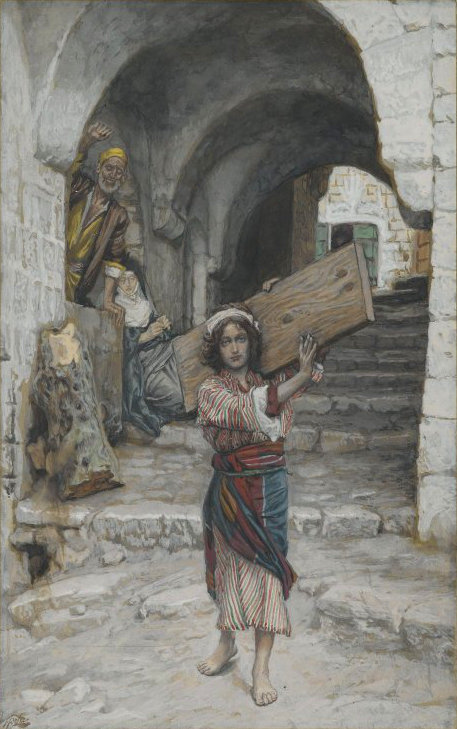
After the incident at the Passover festival, little is known about Jesus’ life until He began His public ministry at around the age of thirty. Catholic tradition holds that He lived a quiet, obedient life as a carpenter, honouring His earthly parents, Mary and Joseph, and preparing for His ministry.
“And Jesus increased in wisdom and in stature, and in favour with God and man.”
Luke 2:52
3. Early Ministry
Jesus’ early ministry, which began around the age of 30, focused on preaching about the Kingdom of God, repentance, and salvation. He was baptised by John the Baptist, marking the start of his public work. He gathered disciples, performed miracles like healing the sick and casting out demons, and taught through parables. His message often challenged religious norms and emphasised love, compassion, and forgiveness, ultimately setting the foundation for his ultimate mission.

The Baptism of Jesus
Jesus began His public ministry by being baptised by John the Baptist in the Jordan River. Although Jesus was sinless, His baptism marked the beginning of His divine mission and was an act of solidarity with humanity’s need for repentance.
“And when Jesus was baptised, he went up immediately from the water, and behold, the heavens were opened and he saw the Spirit of God descending like a dove, and alighting on him;”
Matthew 3:16
The Temptation of Jesus
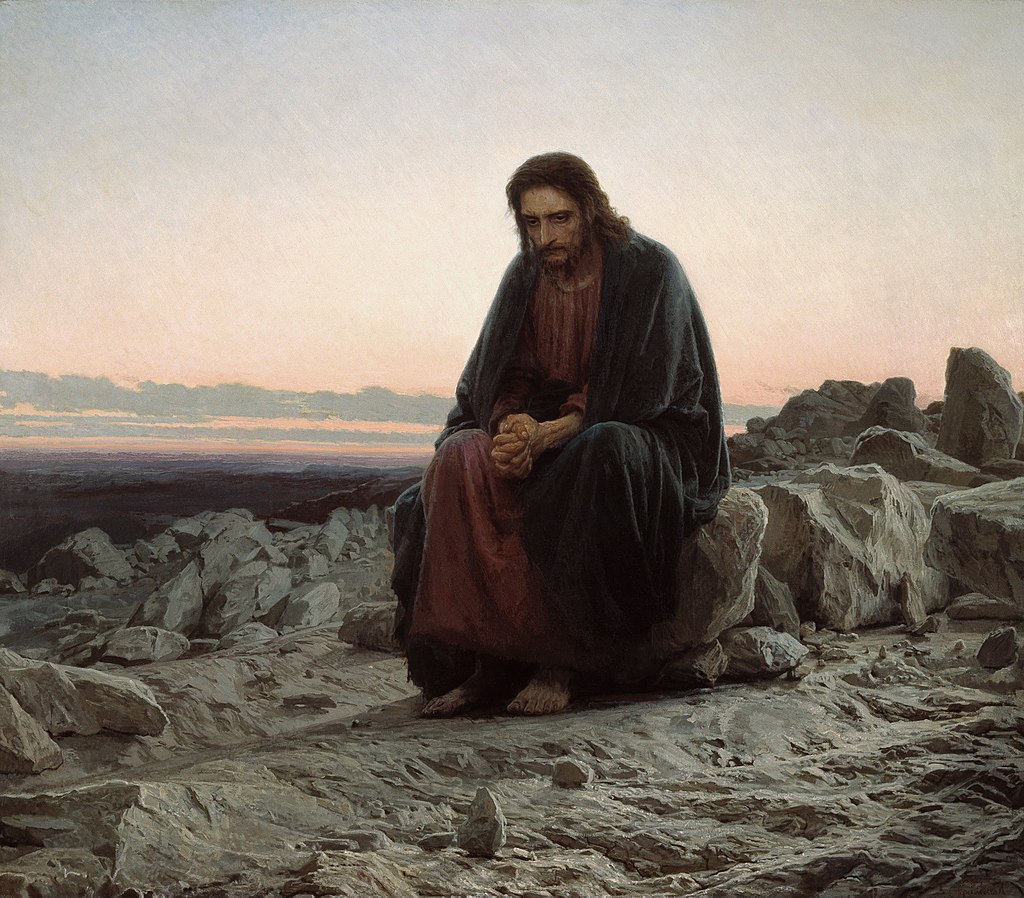
Immediately after His baptism, Jesus spent 40 days in the wilderness, where He was tempted by Satan. Satan tempted Jesus in three ways: to turn stones into bread, to throw Himself down from the temple, and to worship Satan for worldly power.
“Then Jesus was led up by the Spirit into the wilderness to be tempted by the devil. And he fasted forty days and forty nights, and afterward he was hungry. And the tempter came and said to him, “If you are the Son of God, command these stones to become loaves of bread.”
Matthew 4:1-3

Calling of the First Disciples
Jesus began gathering His first disciples, starting with Simon (Peter) and his brother Andrew, followed by James and John, the sons of Zebedee, all of whom were fishermen. Jesus called them to follow Him and become “fishers of men”.
“As he walked by the Sea of Galilee, he saw two brothers, Simon who is called Peter and Andrew his brother, casting a net into the sea; for they were fishermen. And he said to them, “Follow me, and I will make you fishers of men.’”
Matthew 4:18-19
The Wedding at Cana (First Miracle)
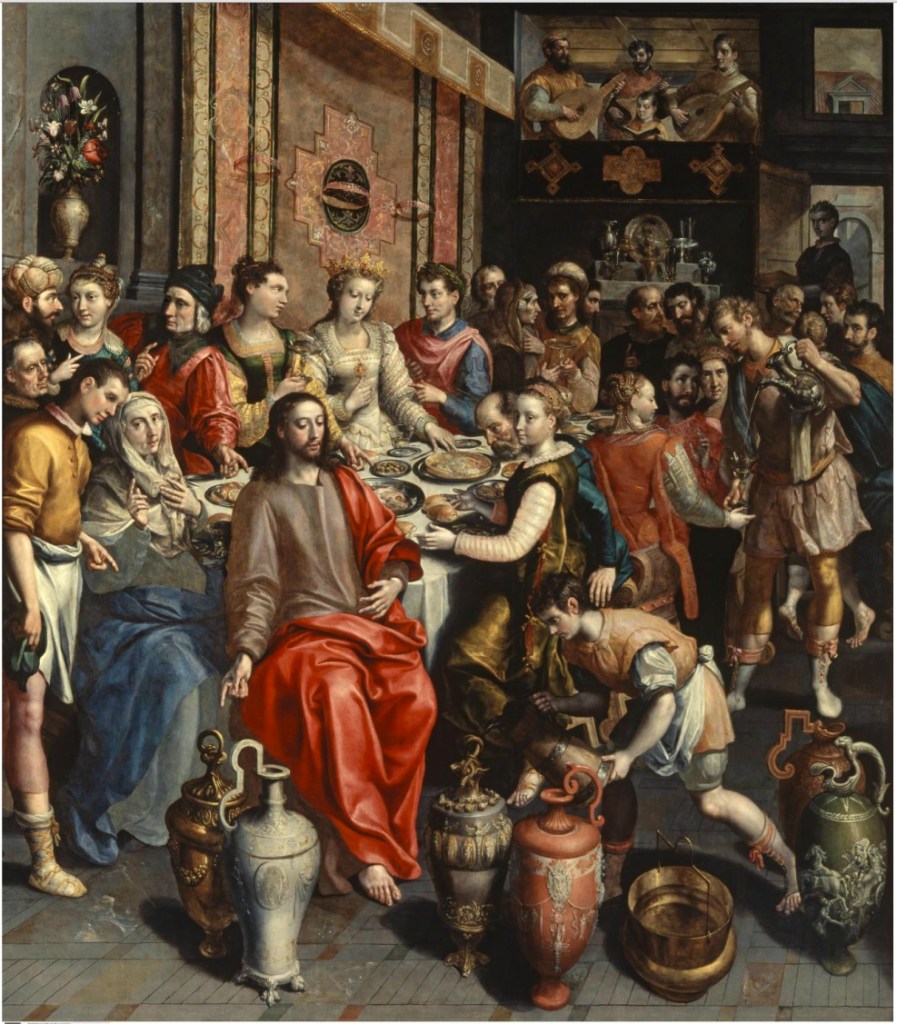
The story of Jesus’ first recorded miracle, demonstrating His divine power and care for human needs. During a wedding celebration in Cana of Galilee, the host ran out of wine, a significant social embarrassment. At His mother Mary’s request, Jesus intervened, though He initially responded that His hour had not yet come. He instructed the servants to fill six large stone jars with water and then draw some out to present to the master of the banquet. Miraculously, the water had turned into high-quality wine, astounding the guests and the host.
“Jesus said to them, “Fill the jars with water.” And they filled them up to the brim. He said to them, “Now draw some out, and take it to the steward of the feast.” So they took it.”
John 2:7-8
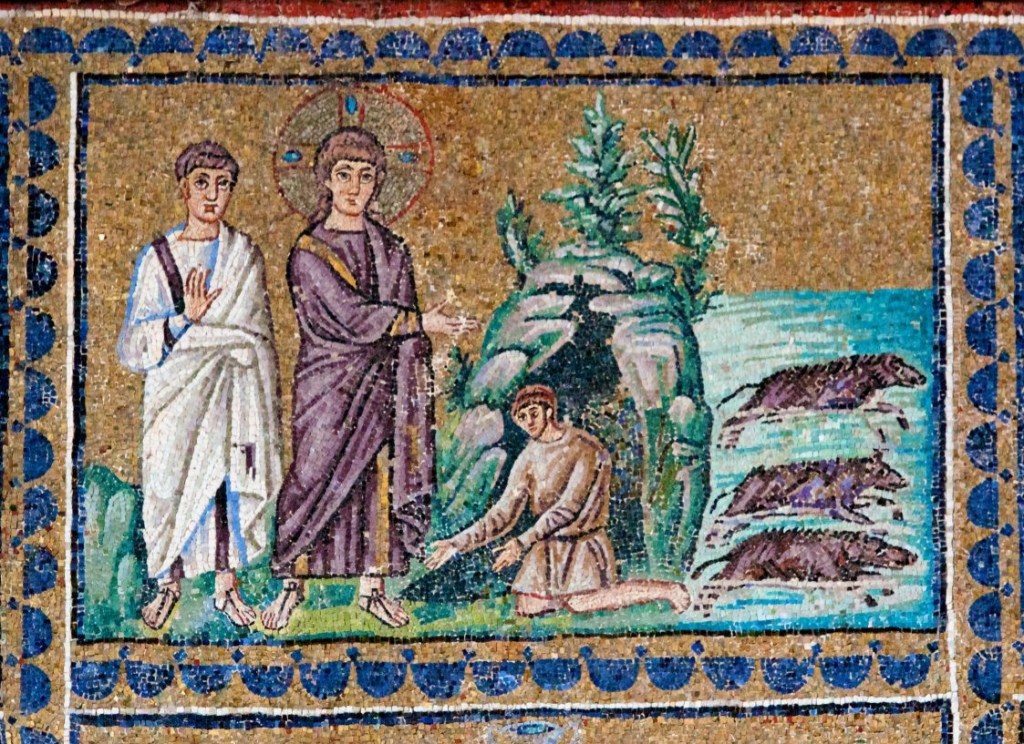
Miracles and Healings
Jesus performed numerous miracles and healings throughout His early ministry, demonstrating His authority over nature, sickness, and evil spirits. Notable miracles include healing the sick (e.g. the paralysed man in Mark 2:1-12), casting out demons (e.g. the Gerasene demoniac in Mark 5:1-20), and calming a storm (Mark 4:35-41).
“’I say to you, rise, take up your pallet and go home.” And he rose, and immediately took up the pallet and went out before them all; so that they were all amazed and glorified God, saying, “We never saw anything like this!”
Mark 2:11-12
4. Mid-Ministry: Expanding His Work
Jesus’ mid-ministry was a time of rapid growth, deepening opposition, and significant preparation. By expanding His audience, demonstrating His power through miracles, and teaching profound truths about God’s Kingdom.

Sending Out the Twelve Apostles
Jesus sent out the Twelve Apostles to preach repentance, proclaim the Kingdom of God, heal the sick, and cast out demons, giving them authority to share in His mission. He instructed them to travel simply, rely on God’s providence, and bring peace to receptive households while testifying against those who rejected their message, preparing them for their future role as leaders of the Church.
“And he called to him his twelve disciples and gave them authority over unclean spirits, to cast them out, and to heal every disease and every infirmity.”
Matthew 10:1
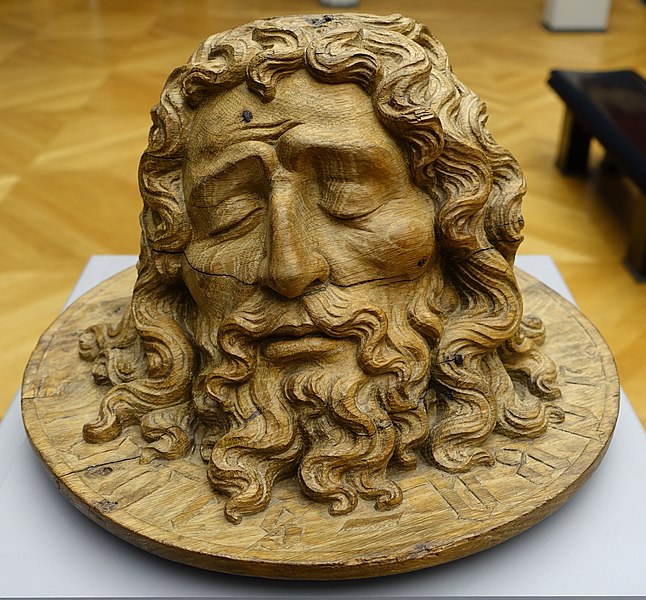
The Death of John the Baptist
John publicly condemned Herod for marrying his brother’s wife, Herodias, which was considered unlawful. Though concerned by John’s remarks, Herod spared him from being executed. At Herod’s birthday banquet Herodias’ daughter Salome danced for him and his guests, and he promised to grant her any request in gratitude. Salome requested John the Baptist’s head on a plate at her mother’s request. Herod reluctantly beheaded John and served his head to Salome, who handed it to her mother. John’s death marked a turning point, as it solidified his role as a precursor to Jesus, whose ministry would soon follow.
“Prompted by her mother, she said, “Give me the head of John the Baptist here on a platter.” And the king was sorry; but because of his oaths and his guests he commanded it to be given; he sent and had John beheaded in the prison, and his head was brought on a platter and given to the girl, and she brought it to her mother. And his disciples came and took the body and buried it; and they went and told Jesus.”
Matthew 14:8-12
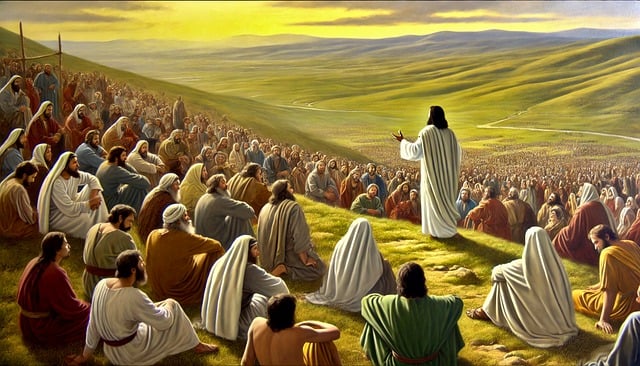
Feeding of The Multitude
In story of the Feeding of the Five Thousand, Jesus and His disciples were in a remote place when a large crowd gathered, hungry after hearing Him teach. With five loaves and two fish from a boy’s offering, Jesus gave thanks and miraculously multiplied the food, feeding over five thousand men, plus women and children, with twelve baskets of leftovers.
“And he directed the people to sit down on the grass. Taking the five loaves and the two fish and looking up to heaven, he gave thanks and broke the loaves. Then he gave them to the disciples, and the disciples gave them to the people.”
Matthew 14:19

Walking on Water
Jesus sent His disciples across the Sea of Galilee by boat after feeding five thousand, staying behind to pray. After waves pounded the disciples’ boat at night, they saw Jesus walking on the water and thought He was a ghost. Jesus encouraged them, “Take courage! I am. Do not fear.” Peter accepted Jesus’ invitation and stepped out onto the water, but he sank when he doubted and focused on the wind and waves. Jesus quickly saved Peter, cautioning his unbelief. After returning to the boat, the storm subsided, and the disciples worshipped Jesus as the Son of God.
“But when they saw him walking on the sea they thought it was a ghost, and cried out; for they all saw him, and were terrified. But immediately he spoke to them and said, “Take heart, it is I; have no fear.’”
Mark 6:49-50

Simon-Peter’s Confession of Christ
Simon openly recognises Jesus’ true identity. While Jesus and His disciples were in the region of Caesarea Philippi, He asked them, “Who do people say the Son of Man is?” The disciples shared various opinions they had heard, such as John the Baptist, Elijah, or another prophet. Simon boldly declared, “You are the Messiah, the Son of the living God.” Jesus validated Peter’s declaration, announcing that he would take on the name Peter (which in Hebrew means “rock”) and assume a pivotal role in the Church’s formation.
“‘And I tell you, you are Peter, and on this rock I will build my church, and the powers of death shall not prevail against it.”
Matthew 16:18
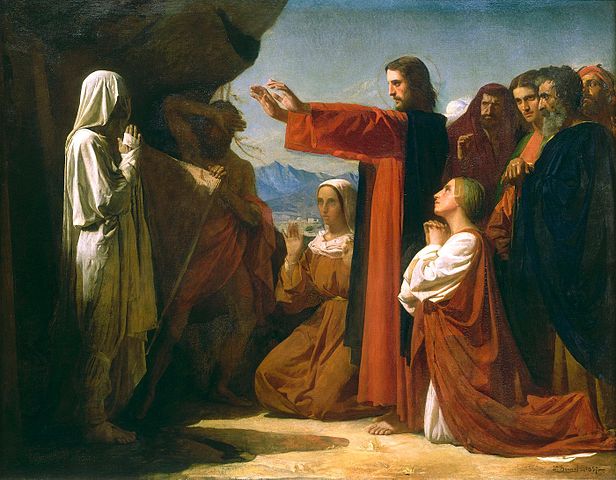
Raising of Lazarus
Lazarus, a close friend of Jesus, had been dead for four days when Jesus arrived in Bethany. In John 11:35, the shortest verse in the Bible, it simply says, “Jesus wept.” This occurs when Jesus sees the mourning of Mary, Martha, and the people around them at the death of Lazarus. Jesus, deeply moved by their sorrow and the pain of death, expresses His compassion and empathy for their grief, even though He knew He was about to raise Lazarus from the dead. At the tomb, Jesus ordered the stone to be rolled away and, with a loud voice, called Lazarus to come out. Lazarus emerged from the tomb, alive and wrapped in burial clothes, a miraculous sign that led many to believe in Jesus but also intensified the opposition of the religious leaders. This event foreshadowed Jesus’ own resurrection and His power to give eternal life.
“When he had said this, he cried with a loud voice, “Lazarus, come out.” The dead man came out, his hands and feet bound with bandages, and his face wrapped with a cloth. Jesus said to them, “Unbind him, and let him go.’”
John 11:43-44
5. Growing Opposition
As Jesus’ ministry gained prominence, His teachings, miracles, and growing following began to draw increasing opposition from religious leaders, particularly the Pharisees, Sadducees, and scribes. Their fear of losing authority, misunderstandings about Jesus’ mission, and challenges to their traditions motivated this opposition, leading to their plot to arrest and kill Him.
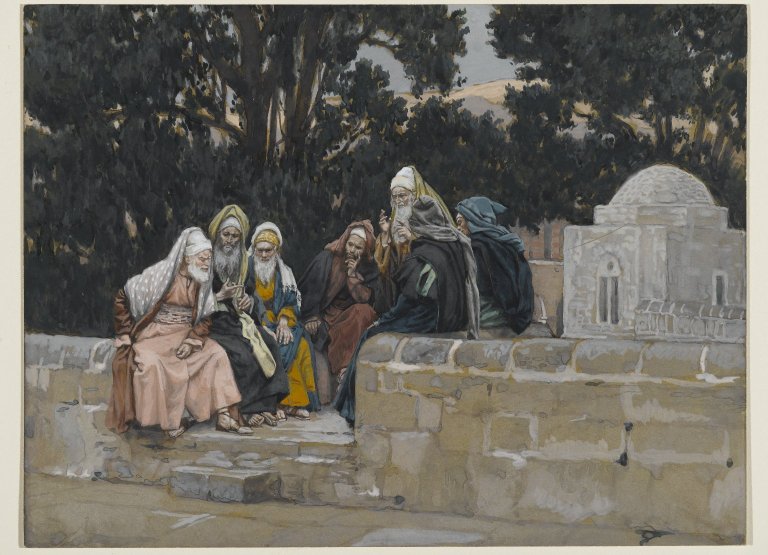
Sanhedrin Plot to Kill Jesus and Lazarus
After Jesus raised Lazarus from the dead, the opposition from religious leaders intensified as His miraculous act drew many to believe in Him, further threatening their authority. Alarmed by His growing following, the Pharisees and chief priests convened a meeting of the Sanhedrin, where Caiaphas, the high priest, declared that it was better for one man (Jesus) to die than for the entire nation to suffer under Roman reprisal. From that point, they actively plotted to kill Jesus. Moreover, because Lazarus’ resurrection was a powerful testimony to Jesus’ divine authority and attracted even more followers, the chief priests also conspired to kill Lazarus, seeking to eliminate both the miracle-worker and the living evidence of His power.
“He did not say this of his own accord, but being high priest that year he prophesied that Jesus should die for the nation, and not for the nation only, but to gather into one the children of God who are scattered abroad. So from that day on they took counsel how to put him to death.”
John 11: 51–53
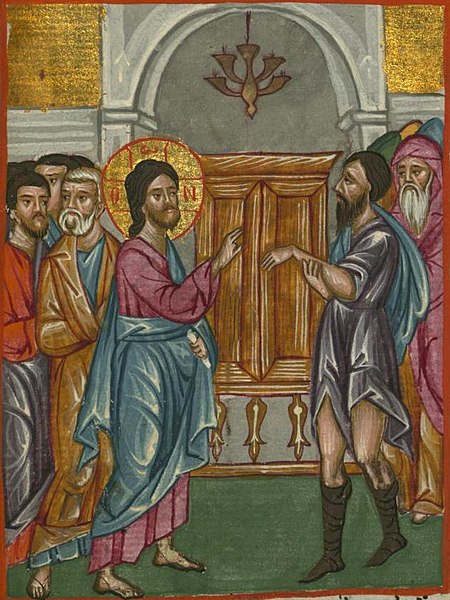
Healing on the Sabbath
In one instance, Jesus healed a man with a withered hand in the synagogue on the Sabbath. The Pharisees, watching closely, sought to accuse Him of breaking Sabbath laws. Jesus challenged their hypocrisy, asking whether it was lawful to do good or harm on the Sabbath. When they remained silent, He healed the man, exposing their legalism and lack of mercy. This act infuriated the Pharisees.
“Again he entered the synagogue, and a man was there who had a withered hand. And they watched him, to see whether he would heal him on the sabbath, so that they might accuse him. And he said to the man who had the withered hand, “Come here.” And he said to them, “Is it lawful on the sabbath to do good or to do harm, to save life or to kill?” But they were silent.”
Mark 3:1–4
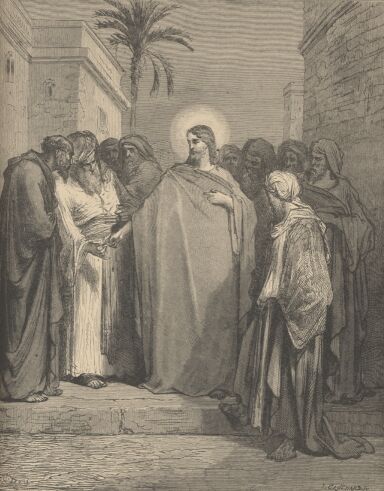
Debating the Pharisees about Paying Taxes
The Pharisees engage Jesus in a dispute about Caesar and the Roman State, with the intention of trapping and discrediting Him. The Pharisees and Herodians asked Jesus whether it was lawful to pay taxes to Caesar, aiming to corner Him: affirming the tax could alienate His Jewish followers, while rejecting it could lead to charges of rebellion against Rome. Jesus, knowing their intentions, asked for a denarius and pointed out Caesar’s image on it. He replied, “Give back to Caesar what is Caesar’s, and to God what is God’s.” His answer silenced His opponents, as it upheld civic responsibility while affirming ultimate allegiance to God, showcasing His divine wisdom and authority.
“‘Tell us, then, what you think. Is it lawful to pay taxes to Caesar, or not?” But Jesus, aware of their malice, said, “Why put me to the test, you hypocrites? Show me the money for the tax.” And they brought him a coin. And Jesus said to them, “Whose likeness and inscription is this?” They said, “Caesar’s.” Then he said to them, “Render therefore to Caesar the things that are Caesar’s, and to God the things that are God’s.’”
Mark 3:1–4
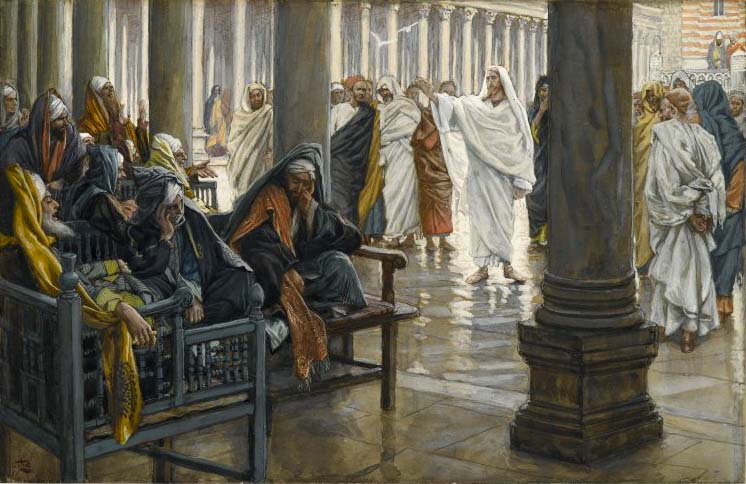
Jesus Denounces Scribes and Pharisees
Jesus openly condemns the scribes and Pharisees for their hypocrisy, pride, and legalism, revealing how their actions burdened others without truly honouring God. Jesus pronounced a series of “woes” against them, criticising their focus on outward appearances while neglecting justice, mercy, and faithfulness. He likened them to whitewashed tombs, clean on the outside but filled with corruption within, and accused them of blocking others from entering God’s kingdom while failing to enter themselves. This confrontation not only revealed their spiritual blindness but also highlighted Jesus’ call for genuine humility, repentance, and inner transformation over empty religious rituals.
“’Woe to you, scribes and Pharisees, hypocrites! for you tithe mint and dill and cummin, and have neglected the weightier matters of the law, justice and mercy and faith; these you ought to have done, without neglecting the others. You blind guides, straining out a gnat and swallowing a camel!’”
Matthew 23:23-24
6. Holy Week Leading to Christ’s Crucifixion
Holy Week encompasses several key biblical events that recount the final days of Jesus Christ’s earthly ministry before his crucifixion. It is believed to that this stage of Jesus’ ministry occurred approx. 30-33 AD when He was around 33 years of age.
Palm Sunday
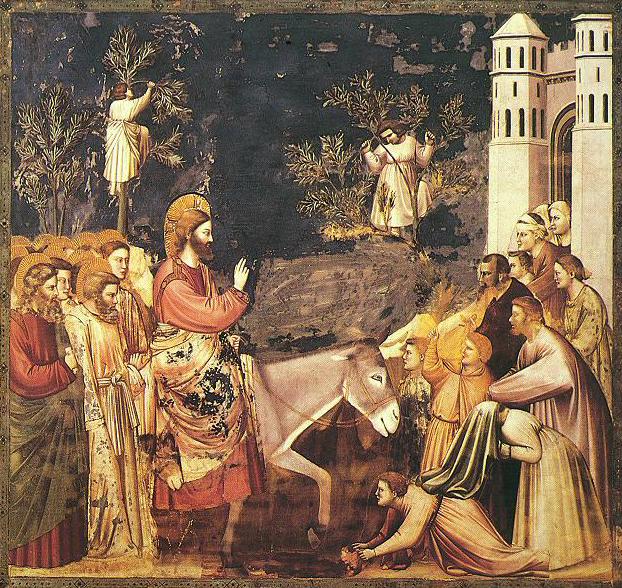
Jesus’ Triumphal Entry into Jerusalem
As Jesus approached Jerusalem, he sent two disciples to find a colt for him to ride. When he entered the city, crowds of people laid their cloaks on the road and spread palm branches, shouting, “Hosanna to the Son of David!” and “Blessed is he who comes in the name of the Lord!” This event fulfilled the centuries-old prophecy from the Old Testament book of Zechariah, which foretold the arrival of a king who brings peace. Palm Sunday marks the beginning of Holy Week, leading up to Jesus’s crucifixion and resurrection.
“And when he entered Jerusalem, all the city was stirred, saying, “Who is this?” And the crowds said, “This is the prophet Jesus from Nazareth of Galilee.’”
Matthew 21:10-11
“Rejoice greatly, O daughter of Zion!
Shout aloud, O daughter of Jerusalem!
Lo, your king comes to you;
triumphant and victorious is he,
humble and riding on an ass,
on a colt the foal of an ass.”
Zechariah 9:9
Holy Monday

Cleansing of the Temple
A rare moment in the Bible that displays Jesus’ righteous anger against corruption and misuse of sacred space. Jesus enters the temple courts in Jerusalem and finds people selling animals for sacrifice and money changers conducting business, turning the house of worship into a marketplace. In a dramatic act, Jesus overturned the tables of the money changers, drove out those who were buying and selling, and declared His victory. This act not only challenged the greed and exploitation taking place but also symbolised His authority over the temple and his mission to restore true worship. It provoked the religious leaders, deepening their hostility toward Him.
“And making a whip of cords, he drove them all, with the sheep and oxen, out of the temple; and he poured out the coins of the money-changers and overturned their tables. And he told those who sold the pigeons, “Take these things away; you shall not make my Father’s house a house of trade.’”
John 2:15–16
Holy Tuesday
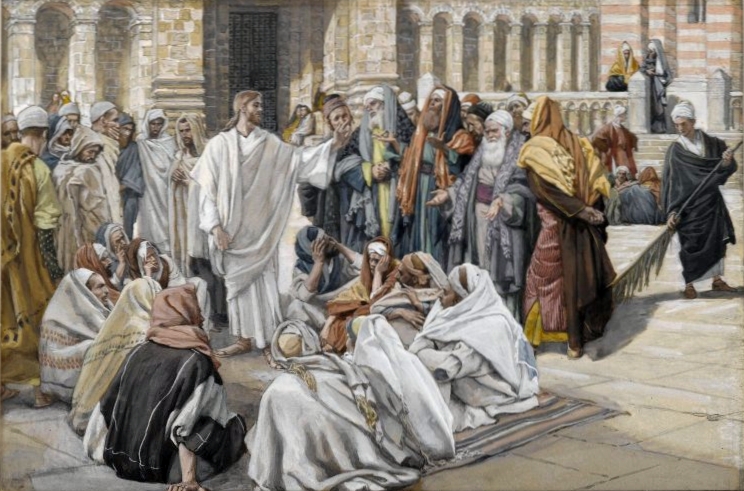
The Two Commandments of Love
Holy Tuesday focuses on Jesus’ teachings and confrontations with religious leaders as He continued to prepare for His Passion. In the Gospels, Jesus debates with the Pharisees and Sadducees about His authority (Matthew 21:23-27) and delivers key parables, such as the Parable of the Tenants, which foreshadows His death (Matthew 21:33-46). He also speaks about the greatest commandments, love of God and neighbour.
“’Teacher, which is the great commandment in the law?” And he said to him, “You shall love the Lord your God with all your heart, and with all your soul, and with all your mind. This is the great and first commandment. And a second is like it, You shall love your neighbour as yourself. On these two commandments depend all the law and the prophets.’”
Matthew 22:36-40
Holy Wednesday (Spy Wednesday)
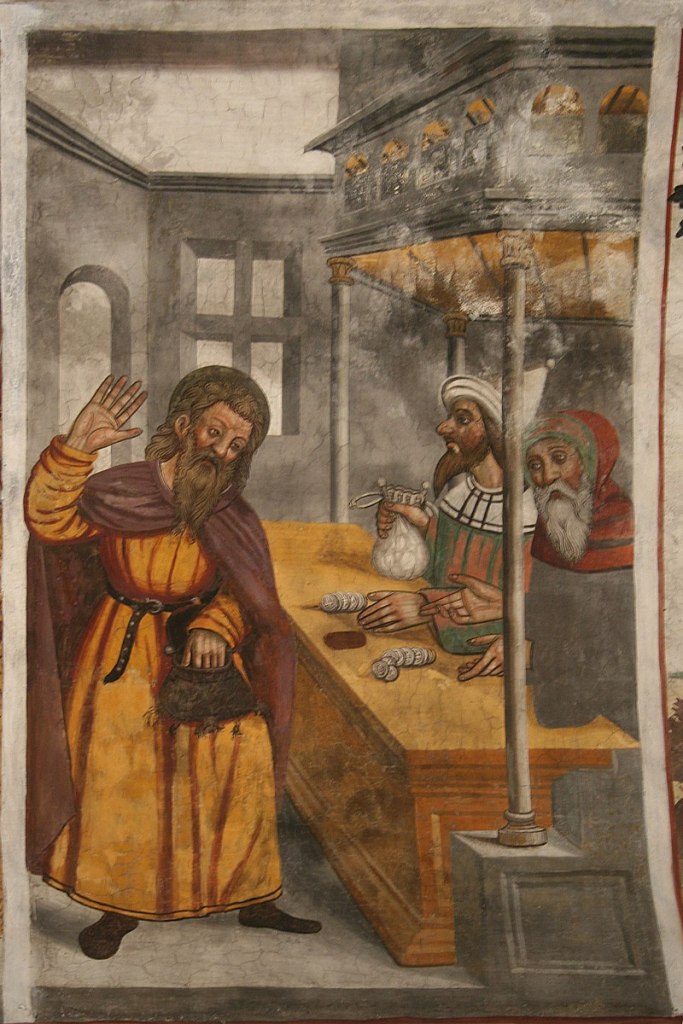
Judas Iscariot Betrays Jesus
Judas Iscariot, one of the 12 apostles of Jesus, conspires with the chief priests to hand over Jesus for thirty pieces of silver. This betrayal sets the stage for Jesus’ arrest and crucifixion.
The Gospels don’t provide a single, definitive reason for his betrayal, leaving his ultimate motivations somewhat mysterious and open to interpretation; however, scholars and theologians theorise the following:
- Greed and Corruption
In Matthew 26:14–16, Judas approaches the chief priests and agrees to betray Jesus in exchange for thirty pieces of silver. This suggests that financial greed was a key motivator. In John 12:4–6, Judas is also described as a thief who used to steal from the disciples’ money bag, portraying him as corrupt. - Satanic Influence
Luke 22:3–4 and John 13:2 state that Satan entered Judas, influencing him to betray Jesus. This indicates a spiritual or demonic element to his actions, suggesting he was overtaken or influenced by evil forces. - Disillusionment or Misunderstanding
Some interpretations suggest Judas may have been disillusioned with Jesus’ mission. Judas may have expected Jesus to establish a political kingdom or lead a rebellion against Roman rule, and his betrayal could have been an attempt to force Jesus’ hand or out of frustration with Jesus’ focus on spiritual salvation. - Fulfilment of Prophecy
The betrayal is often seen as fulfilling Old Testament prophecies, such as Psalm 41:9 (“Even my close friend, someone I trusted, one who shared my bread, has turned against me”) and Zechariah 11:12–13, which mentions thirty pieces of silver. This view suggests Judas’ actions were foreseen by God in His plan for salvation.
“Then one of the twelve, who was called Judas Iscariot, went to the chief priests and said, “What will you give me if I betray him to you?” They paid him thirty pieces of silver.”
Matthew 26:14 – 15
Maundy Thursday
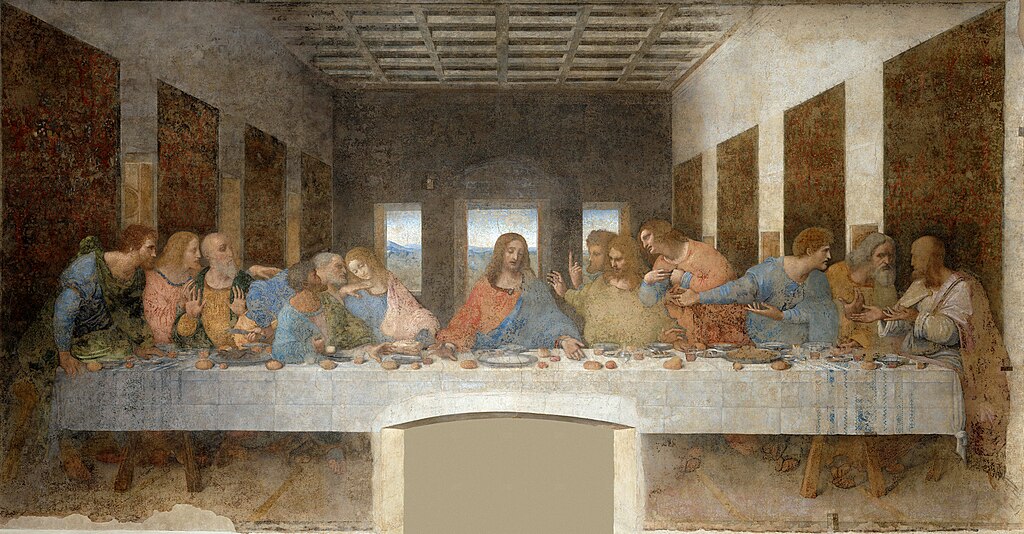
The Last Supper
The final meal Jesus shared with his twelve disciples before his crucifixion, taking place during the Jewish festival of Passover. It is recounted in the Gospels. During the meal, Jesus took bread, blessed and broke it, giving it to his disciples. He also took a cup of wine, gave thanks. He instructed them to partake in this ritual in remembrance of him, establishing the foundation for the Christian sacrament of Communion. Additionally, Jesus foretold his betrayal, identifying Judas Iscariot as the one who would hand him over, further intensifying the solemnity of the moment.
“And he took bread, and when he had given thanks he broke it and gave it to them, saying, “This is my body which is given for you. Do this in remembrance of me.” And likewise the cup after supper, saying, “This cup which is poured out for you is the new covenant in my blood. But behold the hand of him who betrays me is with me on the table.’”
Luke 22:19–21
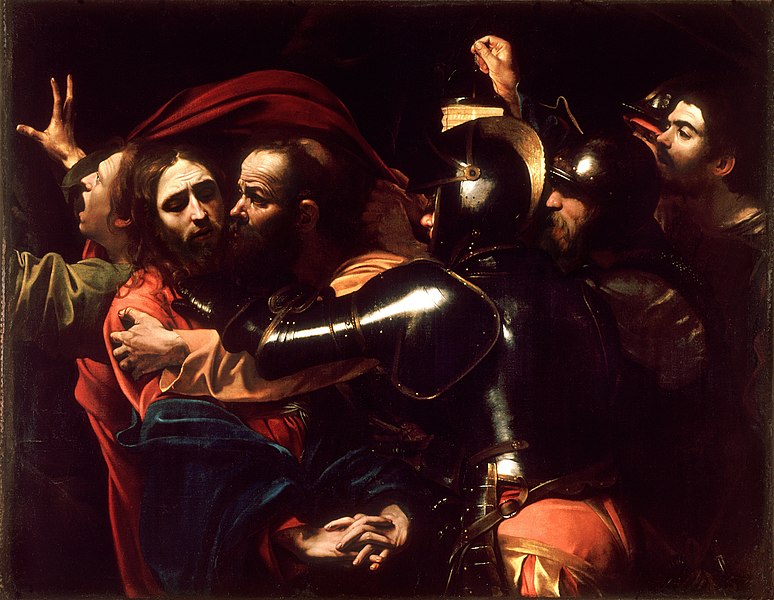
Jesus’ Arrest at the Garden of Gethsemane
After praying in anguish and submitting to God’s will, Jesus is approached by a crowd armed with swords and clubs, sent by the chief priests and elders. Judas Iscariot, his betrayer, identifies him by greeting him with a kiss. Despite Peter’s attempt to defend Jesus by striking the ear of the high priest’s servant, Jesus rebukes the violence, heals the servant, and willingly submits to arrest. His disciples, overwhelmed by fear, abandon him and flee, leaving Jesus alone to face his captors.
“While he was still speaking, there came a crowd, and the man called Judas, one of the twelve, was leading them. He drew near to Jesus to kiss him; but Jesus said to him, “Judas, would you betray the Son of man with a kiss?’”
Luke 22:47–48
Good Friday

Jesus’ Trials Before Religious Authorities
Jesus is brought before the high priest Caiaphas and the Sanhedrin, the Jewish ruling council, where he is falsely accused of blasphemy and threatening to destroy the temple. During the trial, false witnesses are brought forward, but their testimony fails to agree. Jesus remains largely silent until Caiaphas directly asks him if he is the Messiah, the Son of God, to which Jesus affirms, saying, “You have said so,” which the high priest interprets as blasphemy. In response, the council condemns Jesus to death. He is mocked, spat upon, and beaten by the soldiers. This trial, marked by unjust accusations and an illegal, hasty procedure, sets the stage for his subsequent trials before the Roman authorities.
The Sanhedrin wanted Jesus to be sentenced by the Romans because they lacked the authority under Roman rule to carry out the death penalty themselves (John 18:31). While they condemned Jesus for blasphemy, a religious charge, they knew the Romans would not act on that basis alone. To ensure his execution, they reframed their accusations, claiming Jesus declared himself “King of the Jews,” presenting him as a political threat to Roman authority (Luke 23:1–2). Additionally, involving the Romans allowed the Sanhedrin to avoid direct blame for his death, reducing the risk of backlash from the Jewish people, many of whom viewed Jesus as a prophet. By seeking Roman crucifixion, they also aimed to publicly discredit and humiliate Jesus, further discouraging his followers.
“But Jesus was silent. And the high priest said to him, “I adjure you by the living God, tell us if you are the Christ, the Son of God.” Jesus said to him, “You have said so. But I tell you, hereafter you will see the Son of man seated at the right hand of Power, and coming on the clouds of heaven.” Then the high priest tore his robes, and said, “He has uttered blasphemy. Why do we still need witnesses? You have now heard his blasphemy.’”
Matthew 26:63–65

The Scourging and Mocking of Jesus
The Roman soldiers took Jesus and subjected him to brutal flogging, using a whip embedded with metal or bone fragments that tore into his flesh. Afterwards, they mocked him as the “King of the Jews” by dressing him in a scarlet or purple robe (the gospels describe the colour differently, as the shades and their symbolism are closely related), placing a crown made of sharp thorns on his head, and putting a reed in his hand as a sceptre. They knelt before him in a display of mock homage, hailing him sarcastically as king, before spitting on him and striking him with the reed. This cruel treatment was intended to humiliate Jesus and ridicule his claim to kingship, adding to the physical and emotional suffering he endured before the crucifixion.
“Then the soldiers of the governor took Jesus into the praetorium, and they gathered the whole battalion before him. And they stripped him and put a scarlet robe upon him, and plaiting a crown of thorns they put it on his head, and put a reed in his right hand. And kneeling before him they mocked him, saying, “Hail, King of the Jews!’”
Matthew 27:27-29
“And the soldiers plaited a crown of thorns, and put it on his head, and arrayed him in a purple robe;”
John 19: 2
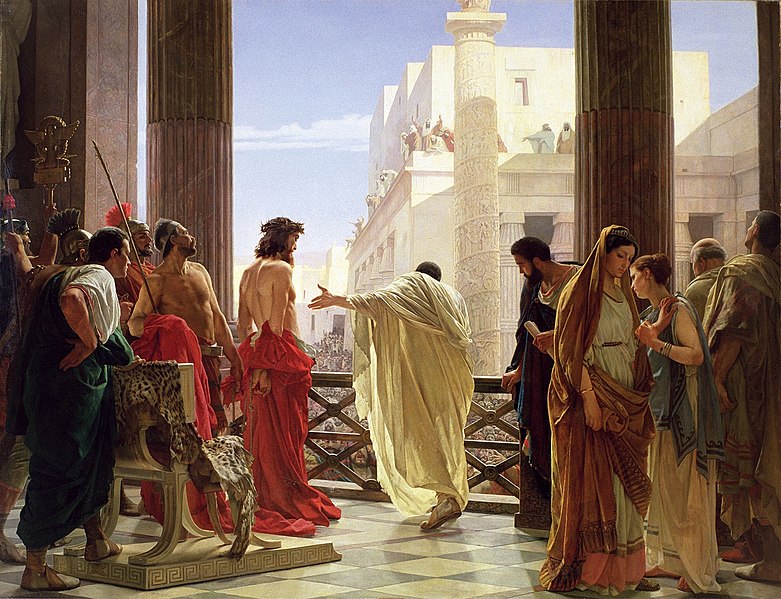
Jesus’ Trials Before Pontius Pilate and Herod Antipas
After being brought to Pontius Pilate, the prefect of the Roman-occupied province of Judaea, the Sanhedrin accused Jesus of claiming to be “King of the Jews,” framing him as a political threat to Rome. Pilate, finding no basis for their charges, questioned Jesus but was hesitant to sentence him. Learning that Jesus was from Galilee, Pilate sent him to Herod Antipas, ruler of Galilee, a district within Judaea, who was in Jerusalem at the time. Herod mocked Jesus, hoping for a miracle, but ultimately sent him back to Pilate without rendering judgment. Despite Pilate’s repeated declarations of Jesus’ innocence, the crowd, incited by the religious leaders, demanded Jesus’ crucifixion. To maintain public order, Pilate reluctantly capitulated, releasing the rebel Barabbas and sentencing Jesus to the cross.
“So when Pilate saw that he was gaining nothing, but rather that a riot was beginning, he took water and washed his hands before the crowd, saying, “I am innocent of this man’s blood; see to it yourselves.” And all the people answered, “His blood be on us and on our children!” Then he released for them Barabbas, and having scourged Jesus, delivered him to be crucified”.
Matthew 27:24–26
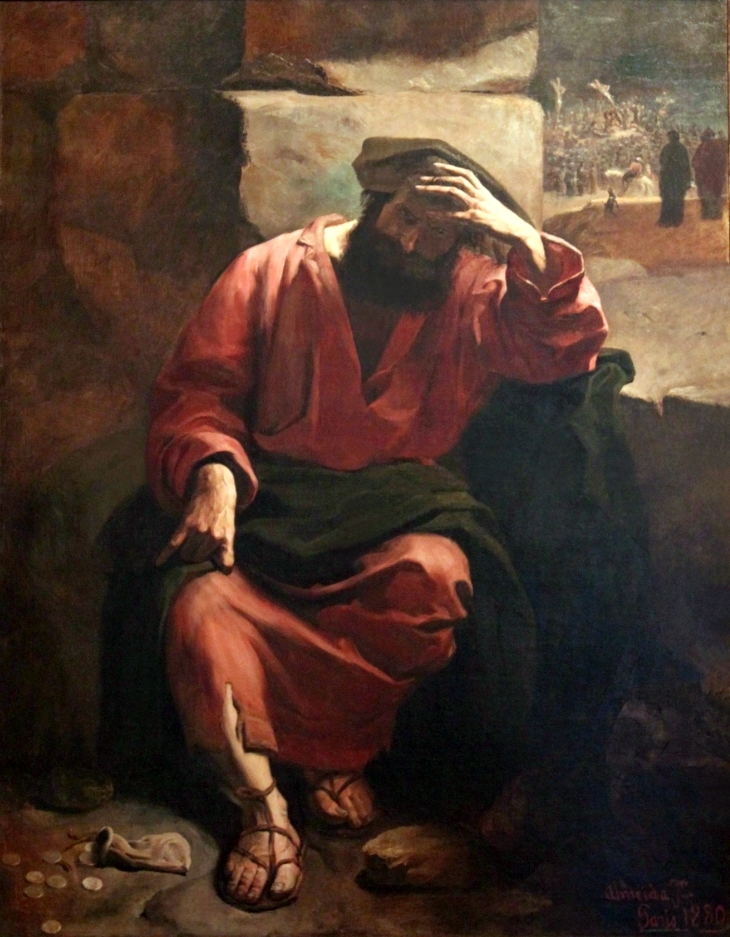
Judas Iscariot’s Death of Despair
After betraying Jesus, Judas Iscariot was said in the Gospels to have taken his own life, though the exact day is not specified in the Bible. His death occurred after Jesus was sentenced and condemned to death but before the crucifixion. Judas, filled with remorse for his actions, returned the 30 pieces of silver he had received for betraying Jesus to the chief priests and elders. After throwing the money into the temple, he went away and hanged himself.
“When Judas, his betrayer, saw that he was condemned, he repented and brought back the thirty pieces of silver to the chief priests and the elders, saying, “I have sinned in betraying innocent blood.” They said, “What is that to us? See to it yourself.” And throwing down the pieces of silver in the temple, he departed; and he went and hanged himself.”
Matthew 27:3-5
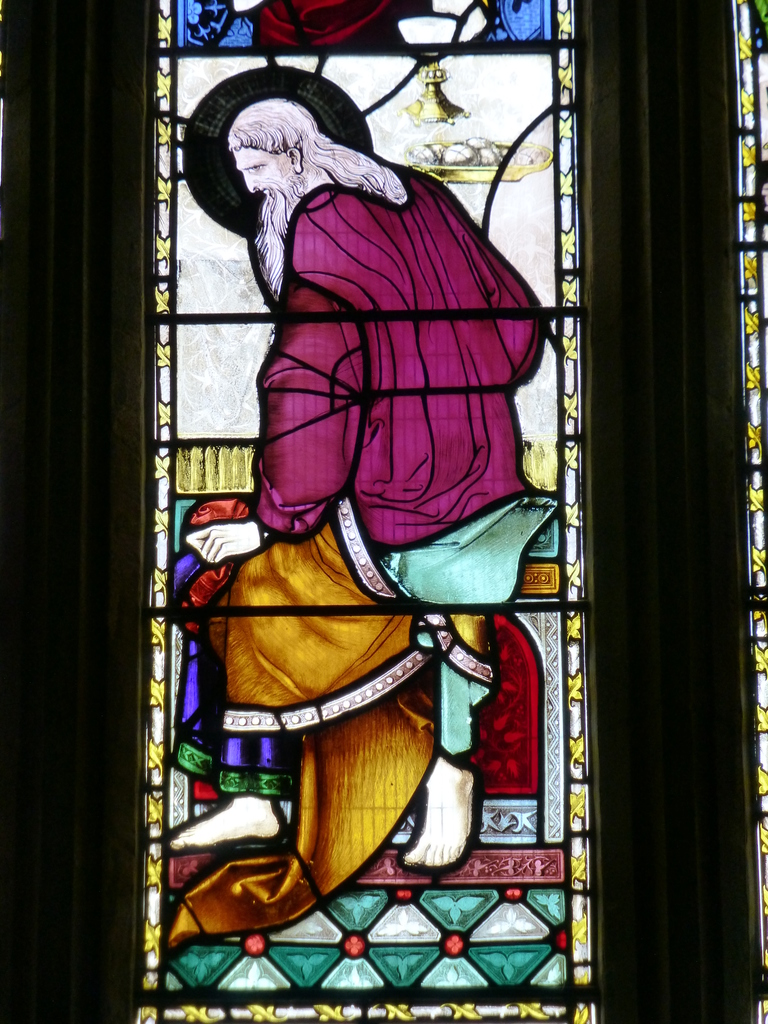
The Catholic Church’s Stance on Judas Iscariot’s Fate After Death
The Catholic Church views Judas Iscariot as a complex and tragic figure. While acknowledging his betrayal of Jesus, the Church does not definitively declare his eternal fate, as it maintains hope for the possibility of God’s mercy. Below is a summary of the Church’s official stance and theological reflections on Judas:
1. Judas’ Betrayal as a Grave Sin
Judas’ betrayal of Jesus is unequivocally condemned in Catholic teaching as a serious sin. He is often cited as an example of the dangers of greed, ambition, and failing to trust in God’s mercy. The Gospels, particularly Matthew, emphasise the gravity of Judas’ act, with Jesus saying the following:
“‘The Son of man goes as it is written of him, but woe to that man by whom the Son of man is betrayed! It would have been better for that man if he had not been born.’”
Matthew 26:24
2. Judas’ Free Will, Prophecy and Influence of Satan
Catholic doctrine holds that Judas acted with free will in betraying Jesus, but his actions were influenced by Satan. While his betrayal fulfilled Old Testament prophecies and was foreseen by God, the Church does not view him as a mere instrument of fate or divine predestination in a way that would override his free will. Judas freely chose to betray Jesus, motivated by personal reasons such as greed, since he was described in the Gospels according to John as being a thief and his disillusionment with Jesus’ mission.
“This he said, not that he cared for the poor but because he was a thief, and as he had the money box he used to take what was put into it.”
John 12:6
3. Judas’ Repentance, Despair and Hope for Salvation
Catholic teaching frequently uses Judas to highlight the significance of repentance, humility, and trusting in God’s mercy, even after grave sin. His life serves as a cautionary tale about the spiritual dangers of sin and despair.
The Catholic Church recognises Judas’ remorse, as seen in Matthew 27:3–5, where he acknowledges his sin and returns the thirty pieces of silver. However, the Church interprets Judas’ subsequent despair and suicide as a failure to trust in God’s infinite mercy. The Church contrasts his response with that of Peter, who also betrayed Jesus but repented and sought forgiveness.
However, the Church does not teach that Judas is definitively in hell. While his actions were grave, his eternal destiny is ultimately known only to God. Pope Benedict XVI, in his book Jesus of Nazareth, emphasised that we cannot judge Judas’ final state.
“We cannot say that Judas is damned; but it is possible that he went to eternal perdition. In any case, we know that he repented and gave back the money, confessing, ‘I have sinned in betraying innocent blood’ (Matthew 27:4).”
Pope Benedict XVI: Jesus of Nazareth, Vol. II: Holy Week (Published in 2011)
Conclusion
The Catholic Church views Judas Iscariot with both condemnation for his actions and hope for God’s mercy. While the Church warns of the consequences of betrayal and despair, it leaves Judas’ ultimate fate in the hands of God’s perfect justice and mercy. This reflects the broader Catholic teaching that no one is beyond redemption if they turn back to God.

Journey to Calvary and Crucifixion
After receiving his death sentence, Jesus started his journey to Calvary by carrying the heavy cross through the streets of Jerusalem. The scourging and the weight of the cross weakened him, causing him to fall. Roman soldiers compelled Simon of Cyrene to assist in carrying it. At Calvary, Jesus was nailed to the cross between two criminals. While enduring immense physical and emotional suffering, he forgave those who crucified him and offered salvation to a repentant thief. After several hours, Jesus declared, “It is finished,” and died. To ensure Jesus was dead, a soldier thrust a spear into Jesus’ side, piercing his body. According to the Gospel of John, “blood and water” flowed out.
“Then Jesus said, “Father, forgive them; for they do not know what they are doing.’”
Luke 23: 34
Holy Saturday

Jesus is Laid in the Tomb
The day after Jesus’ crucifixion and death is a period of silence and mourning in the Bible. Joseph of Arimathea, a secret disciple of Jesus, and Nicodemus, a Pharisee from the Jewish ruling council who sympathised with Jesus, prepared Jesus’ body for burial by wrapping it in linen, placing it in a newly carved rock tomb, and sealing the entrance with a large stone. Fearing that Jesus’ disciples might steal His body and claim His resurrection, the chief priests and Pharisees requested the posting of a guard at the tomb and its sealing. Consequently, they secured the tomb and stationed guards to prevent any tampering. Mary, the mother of Jesus, and Mary Magdalene, a disciple of Jesus, witnessed the location of his entombment. The Bible does not record any specific activities on this day, but it marks a time of waiting, as Jesus’ followers mourned His death and awaited the events of the resurrection on Easter Sunday.
“When it was evening, there came a rich man from Arimathea, named Joseph, who also was a disciple of Jesus. He went to Pilate and asked for the body of Jesus. Then Pilate ordered it to be given to him. And Joseph took the body, and wrapped it in a clean linen shroud, and laid it in his own new tomb, which he had hewn in the rock; and he rolled a great stone to the door of the tomb, and departed. Mary Magdalene and the other Mary were there, sitting opposite the sepulchre.”
Matthew 27:57-61
Easter Sunday

Jesus’ Resurrection
Easter Sunday begins with several women, including Mary Magdalene, Mary the mother of James, and Salome, visiting Jesus’ tomb to anoint His body, only to find the stone rolled away and the tomb empty (Matthew 28:1-10, Mark 16:1-8, Luke 24:1-12, John 20:1-18). Angels appear to the women, announcing that Jesus has risen and instructing them to inform the disciples. Mary Magdalene stays behind and encounters the risen Jesus, initially mistaking Him for a gardener until He calls her by name. Later, Jesus appears to two disciples on the road to Emmaus, walking with them and revealing His identity when He breaks bread. That evening, He appears to the disciples gathered in a locked room, greeting them with peace, showing His wounds, and breathing the Holy Spirit onto them (Luke 24:36-49, John 20:19-23). These events affirm Jesus’ resurrection and His victory over sin and death, fulfilling His promise to His followers.
“‘Then go quickly and tell his disciples that he has risen from the dead, and behold, he is going before you to Galilee; there you will see him. Lo, I have told you.” So they departed quickly from the tomb with fear and great joy, and ran to tell his disciples. And behold, Jesus met them and said, “Hail!” And they came up and took hold of his feet and worshiped him. Then Jesus said to them, “Do not be afraid; go and tell my brethren to go to Galilee, and there they will see me.’”
Matthew 28:7-10
7. Aftermath and Birth of the Catholic Church
Events After Holy Week

Post-Resurrection Appearances and the Great Commission
Over 40 days, Jesus taught His disciples about the Kingdom of God and prepared them for their mission. He issued the Great Commission, instructing them to make disciples of all nations, baptise them, and teach them His commands. This established the universal mission of the Church.
“‘Go therefore and make disciples of all nations, baptising them in the name of the Father and of the Son and of the Holy Spirit, teaching them to observe all that I have commanded you; and lo, I am with you always, to the close of the age.’”
Matthew 28:19-20

Ascension
Forty days after His resurrection, Jesus ascended into heaven. He promised the coming of the Holy Spirit to empower the apostles for their mission, marking the beginning of their leadership in the Church.
“And when he had said this, as they were looking on, he was lifted up, and a cloud took him out of their sight. And while they were gazing into heaven as he went, behold, two men stood by them in white robes, and said, “Men of Galilee, why do you stand looking into heaven? This Jesus, who was taken up from you into heaven, will come in the same way as you saw him go into heaven.’”
Acts 1:9-11

Pentecost
Ten days after the Ascension, the Holy Spirit descended on the apostles in Jerusalem, enabling them to speak in different languages and boldly proclaim the Gospel. This event is often called the “birthday of the Church,” as it marked the beginning of the apostles’ public ministry and the rapid growth of the Christian community.
“When the day of Pentecost had come, they were all together in one place. And suddenly a sound came from heaven like the rush of a mighty wind, and it filled all the house where they were sitting. And there appeared to them tongues as of fire, distributed and resting on each one of them. And they were all filled with the Holy Spirit and began to speak in other tongues, as the Spirit gave them utterance.”
Acts 2:1-4
Apostolic Leadership and Early Church Developments
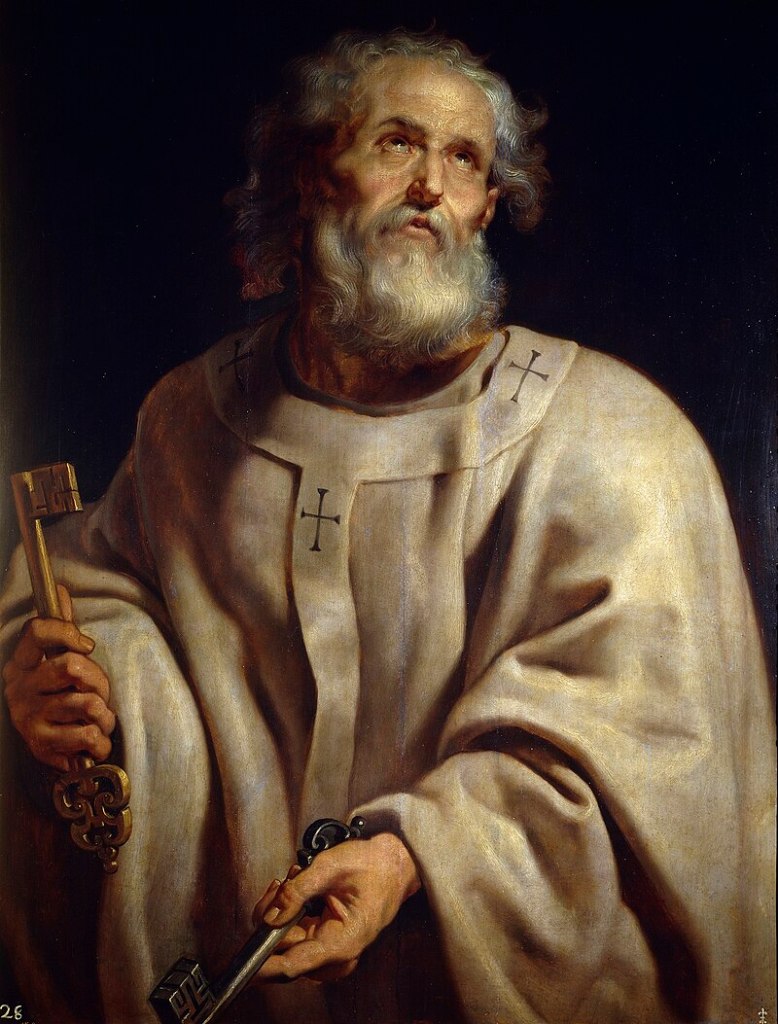
Simon-Peter the First Catholic Pope
Simon, also known as Peter, played a central role in Apostolic Leadership as the leader of the early Church and is regarded by Catholic tradition as the first Pope. After Jesus’ resurrection, Peter emerged as the most prominent of the apostles, demonstrating courage and devotion despite his earlier denial of Jesus. Jesus affirmed Peter’s leadership by declaring, “You are Peter, and on this rock, I will build my Church” (Matthew 16:18). Peter preached boldly at Pentecost, where his sermon led to the conversion of thousands (Acts 2:14-41), and he was instrumental in performing miracles and spreading the Gospel. He also helped resolve disputes in the early Church, including at the Council of Jerusalem, where he advocated for welcoming Gentiles into the faith without requiring adherence to all Jewish laws. Despite facing persecution, imprisonment, and eventual martyrdom in Rome, Peter’s leadership laid the foundation for the Church’s growth and established the principle of apostolic succession, ensuring continuity in the Church’s authority and mission.
“And after there had been much debate, Peter rose and said to them, “Brethren, you know that in the early days God made choice among you, that by my mouth the Gentiles should hear the word of the gospel and believe And God who knows the heart bore witness to them, giving them the Holy Spirit just as he did to us; and he made no distinction between us and them, but cleansed their hearts by faith.”
Acts 15:7-9

Saul of Tarsus (Paul) the Former Christian Persecutor
Saul of Tarsus, later known as Paul, became one of the most influential leaders in the early Church after his dramatic conversion on the road to Damascus. Initially a zealous Pharisee who persecuted Christians, Paul encountered the risen Jesus, who called him to be an apostle to the Gentiles. Paul’s apostolic leadership was characterised by his missionary journeys across the Roman Empire, where he preached the Gospel, established churches, and nurtured new Christian communities (Acts 13–28). He was a powerful theologian, writing numerous letters (Epistles) that form much of the New Testament, addressing issues of faith, salvation, and unity in Christ. Paul’s advocacy for including Gentiles without requiring adherence to Jewish laws was pivotal at the Council of Jerusalem (Acts 15). Despite facing persecution, imprisonment, and eventual martyrdom in Rome, Paul’s relentless efforts to spread Christianity helped transform it into a global faith and solidified his role as one of the Church’s greatest apostles and missionaries.
“But Saul, still breathing threats and murder against the disciples of the Lord, went to the high priest and asked him for letters to the synagogues at Damascus, so that if he found any belonging to the Way, men or women, he might bring them bound to Jerusalem. Now as he journeyed he approached Damascus, and suddenly a light from heaven flashed about him. And he fell to the ground and heard a voice saying to him, “Saul, Saul, why do you persecute me?” And he said, “Who are you, Lord?” And he said, “I am Jesus, whom you are persecuting;’”
Acts 9:1-5
Rise of the Catholic Church (Catholicism)
- Spread of Christianity by the Early Church
Christianity spread throughout the Roman Empire and beyond, despite persecution. By the 4th century, it had grown significantly, partly due to missionary efforts by apostles and their successors. - The Conversion of Roman Emperor Constantine the Great
Constantine the Great’s conversion to Christianity is one of the most significant events in the history of the Roman Empire. According to historical accounts, Constantine experienced a vision before the Battle of the Milvian Bridge in 312 AD. In this vision, he saw a symbol with the words “In Hoc Signo Vinces” (“In this sign, conquer”). He interpreted this as a divine message and ordered his soldiers to mark their shields with the Christian symbol (the Chi-Rho). After winning the battle, Constantine attributed his victory to the Christian God and began to favour Christianity. In 313 AD, he issued the Edict of Milan, which granted religious tolerance throughout the empire and ended the persecution of Christians. Constantine’s support for Christianity helped it transition from a persecuted sect to the dominant religion of the Roman Empire. - Establishment of the Catholic Church
The term “Catholic” (meaning “universal”) was used early to describe the Church, emphasising its global mission and unity under apostolic leadership.
The Church formalised doctrines and practices through councils, such as the Council of Nicaea (325 AD), which clarified core beliefs, including the divinity of Jesus. - Formation of the Papacy
The Bishop of Rome (the Pope) became recognised as the spiritual successor to Saint Peter, holding a position of primacy in the Church. This established the foundation of the Catholic Church’s hierarchical structure. - Catholicism’s Preservation and Transmission of Faith
The Catholic Church played a key role in preserving the teachings of Jesus, compiling the New Testament, and spreading Christianity through missionary work. Since its inception, the Catholic Church has been dedicated to the preservation and transmission of the Christian faith. Founded on the teachings of Jesus Christ and the apostles, the Church established a structured hierarchy, including the papacy, which has maintained doctrinal continuity and unity through ecumenical councils and creeds. By meticulously copying and preserving sacred texts, the Church ensured the integrity of the Scriptures. Through monasteries and universities, it fostered intellectual growth and theological scholarship, contributing to the development of Western thought. The liturgy, sacraments, and rituals have passed down traditions and teachings across generations, while missionaries spread the faith worldwide. In modern times, the Church continues to adapt, using media and technology to reach believers globally. Today, Catholicism and the Catholic Church is one of the largest religious institutions in the world, with over 1.3 billion followers (approximately 16.75% of the world’s population) as of 2024, ensuring that the core tenets of Christianity are preserved and transmitted to future generations.

