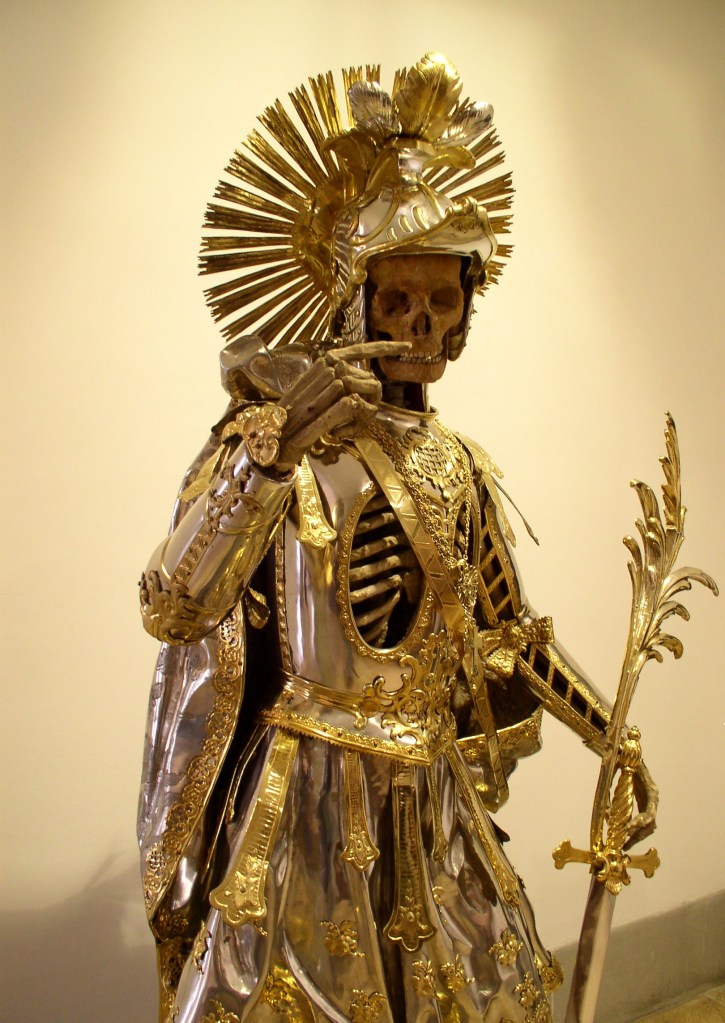
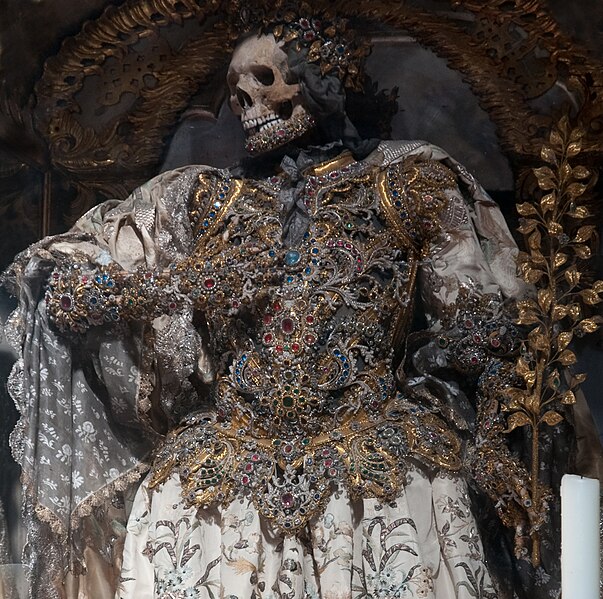
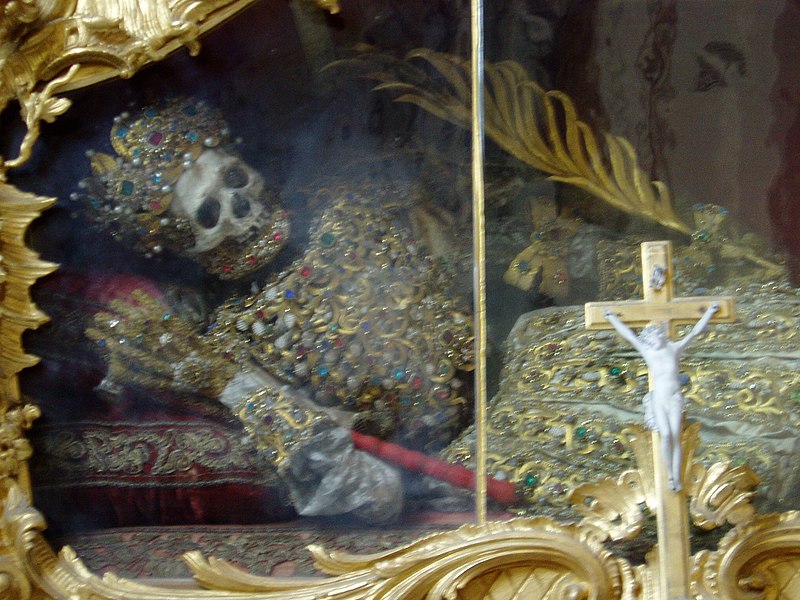
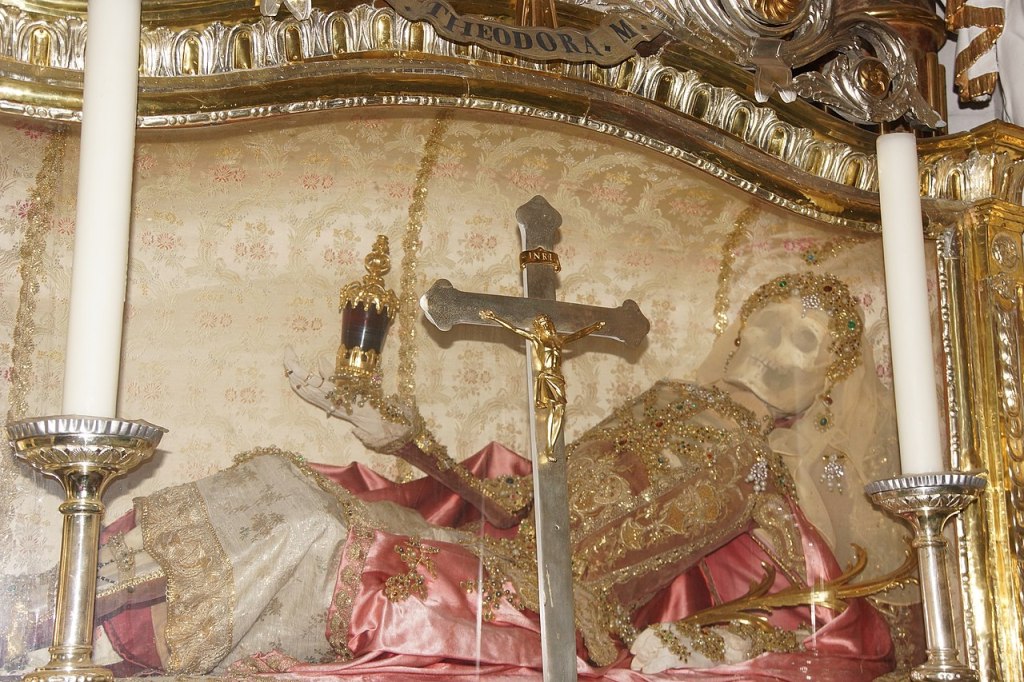
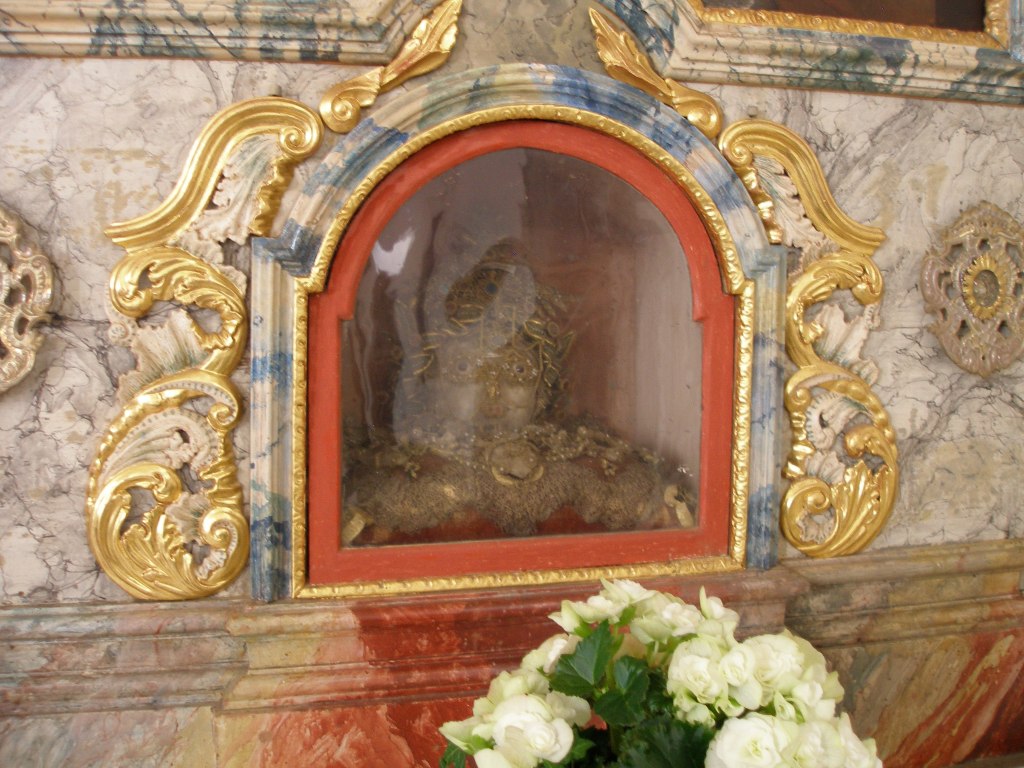
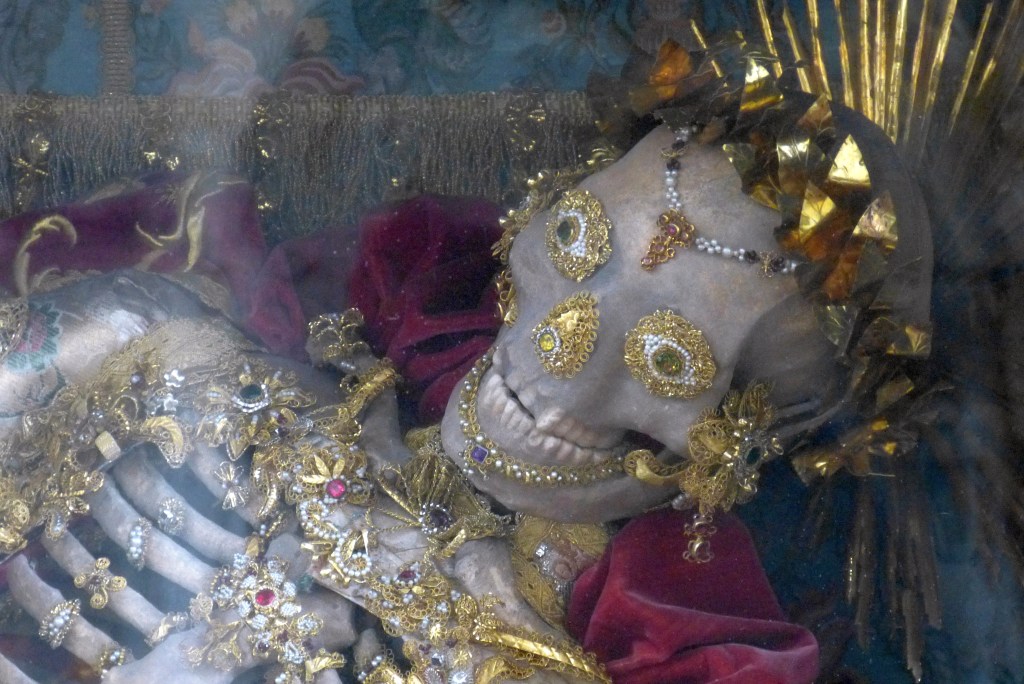
Catacomb saints were the bodies of ancient Christians carefully exhumed from the catacombs of Rome and sent abroad to serve as relics of certain saints from the 16th century to the 19th century. They were typically lavishly decorated.
During the 16th century Beeldenstorm and the 17th century iconoclasm, Catholic churches across Europe were methodically cleared of their religious symbols, iconography, and relics. In retaliation, the Vatican commanded the relocation of numerous skeletons from the catacombs beneath the city to various towns and cities across Europe, especially in Germany, Austria, and Switzerland. Most of the corpses did not belong to individuals of religious significance, although believed to have been early Christian martyrs based on their burial.
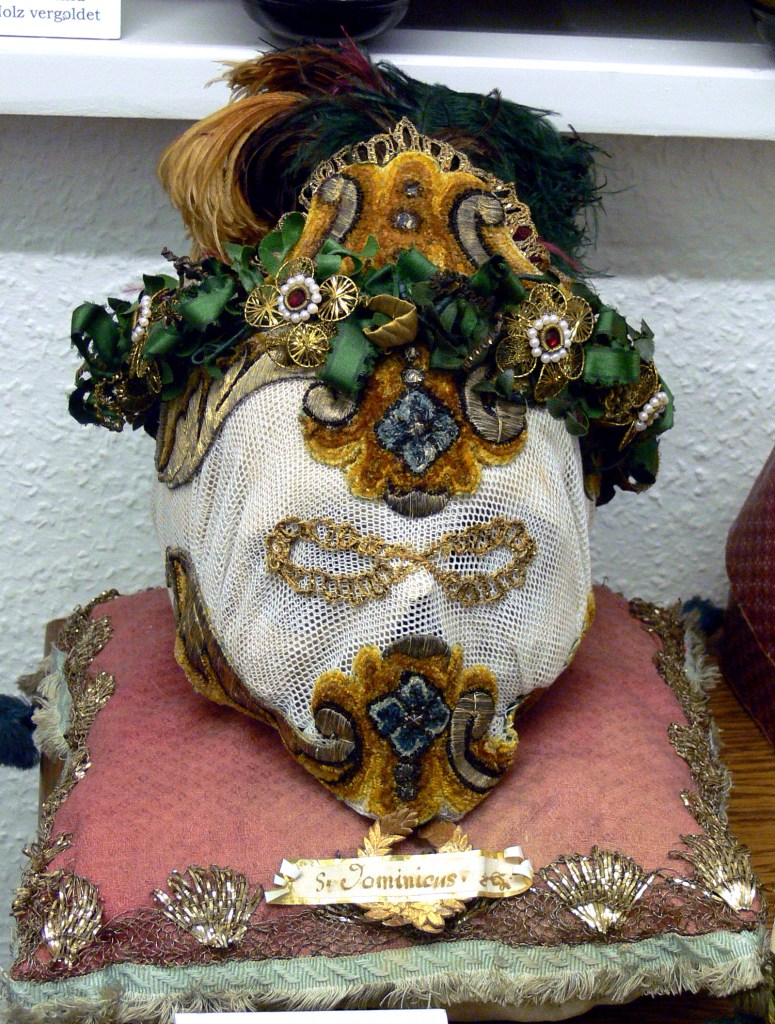
Head reliquary of a catacomb martyr St. Dominicus, chenille ornaments, feathers, wire work, tulle, trimmings. Weingarten, Museum for Monastic Culture, Germany.
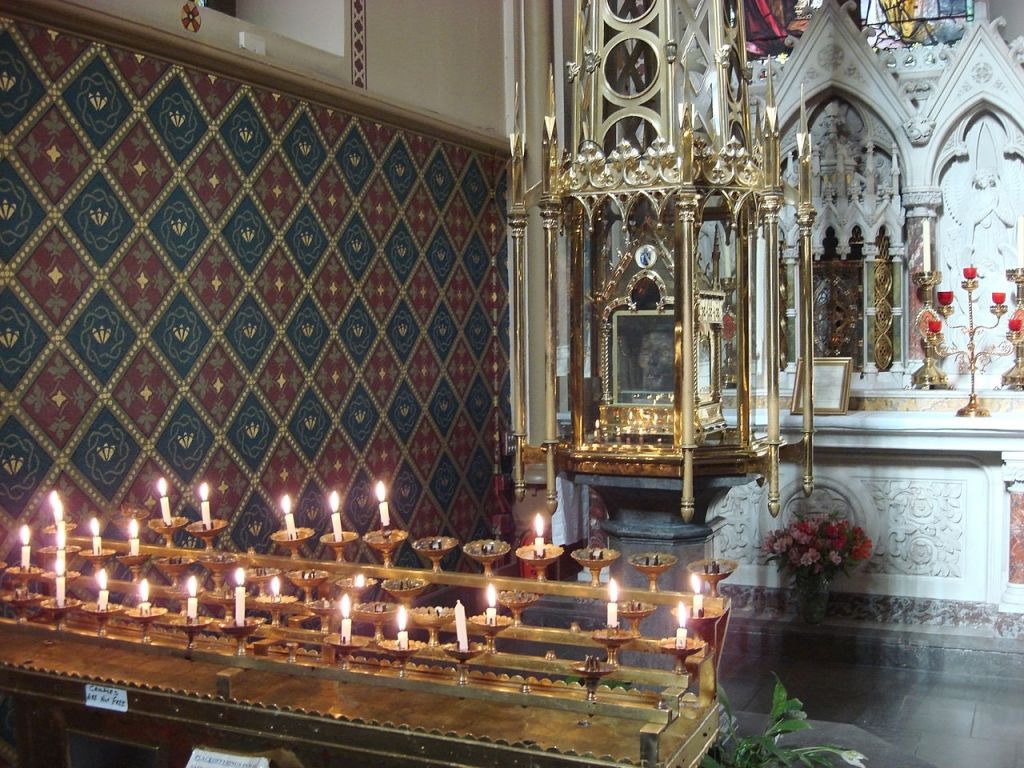
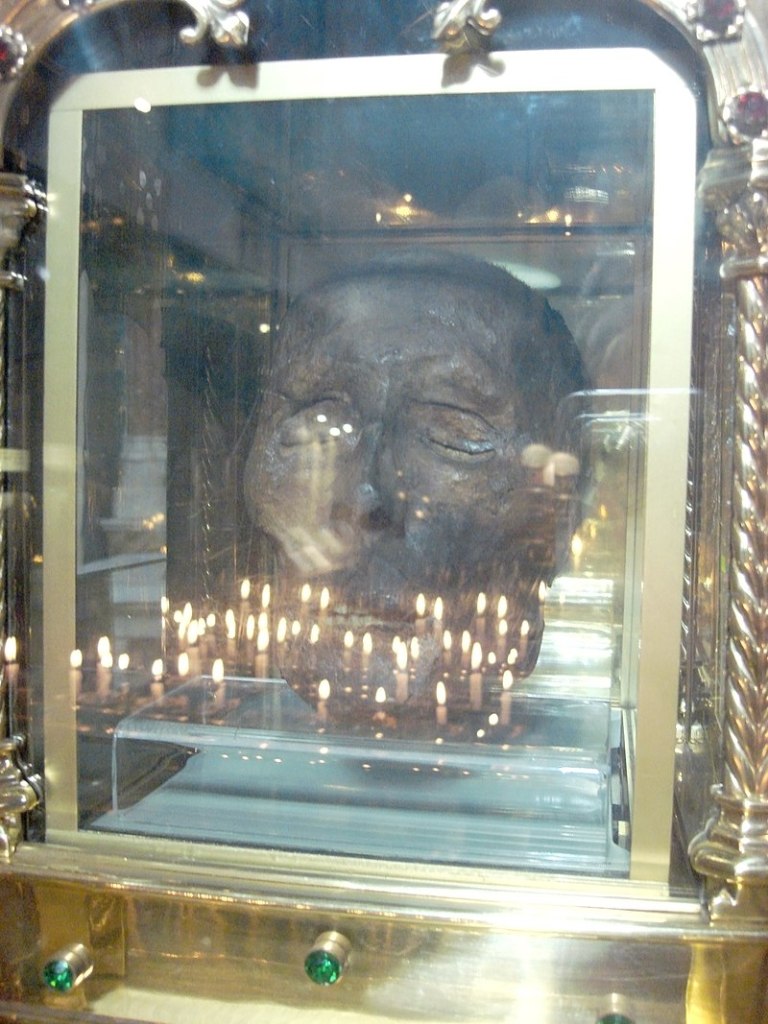
St. Oliver Plunket is an official Irish saint as he was beatified in 1920 and canonised in 1975. He was born in Loughcrew Cairns, County Meath, Ireland, in 1625, was the last man to be a victim of the Popish Plot and to suffer martyrdom for the Catholic faith in England.
Two years after his remains were exhumed, they were moved to Germany and his head was brought to Rome. In 1921, two hundred and forty years after he died in 1681, his head was returned to Ireland, where it has rested in its reliquary in St. Peter’s Church in the city of Drogheda in County Louth.