
We are delighted to celebrate the sacrament of marriage in our parish and to make our churches available for catholic weddings. Ashbourne and Donaghmore Church wedding protocols are outlined on this webpage alongside an outline of the paperwork and steps to be completed in preparation for a church wedding. Our priests and our parish secretary are always ready to answer any question a couple may have and to assist in any way we can.

Step 1
A Year or More Out from the Wedding – Book the Church and Let the State Know that You Wish to Get Married
First, you should book the church where you would like your wedding to take place. Any couple wishing to organise a wedding in either Ashbourne or Donaghmore Church should meet with a priest of the parish after attendance at Sunday Mass and state their wish to get married in Ashbourne parish. The priest on congratulating them gives them the Wedding Booking Form and Wedding Protocol Guidelines. When the couple have the Wedding Book Form completed, they arrange through the Parish Office to meet the parish priest or his nominee to book the church for the time and date requested. At this meeting the first part of the Pre-Nuptial Enquiry Form is completed. A donation of €250 is taken which goes towards the use of the church (lighting, heating, insurance, grounds etc.) and a stipend for the sacristan who will be attending to your needs on the days prior to and on the day of the wedding.
If a couple would like a priest of our parish to solemnise their sacramental union, they should ensure that they say this to the priest and that this is indicated on the Booking Form. The priests of our parish are more than happy to be your solemniser. Alternatively, if the couple have a priest that they know that they would like to officiate at their wedding this can be organised. In order for our parish priest to delegate this responsibility, this priest will need to contact our parish before the wedding day and provide an up to date celebret.
After the church and priest are organised, you should begin the process of receiving permission from an Irish State Registrar of Marriages for your wedding to take place. Go online to book your appointment with a local registrar at www.crsappointments.ie. The state has its own particular timeframe and requirements, so it is best to err on the side of letting them know well in advance of your marriage intentions. The state will give you permission to get married. It will also give permission for the church to host your wedding, and the registrar will write to the priest that you have chosen as solemniser giving him permission to officiate at the ceremony.

Step 2
A Year before the Wedding
Do Your Pre- Marriage Course
A Pre-Marriage Course should be booked with Accord which is the Irish Catholic Church marriage support organisation. Details of courses and venues are available on www.accord.ie or simply phone Accord’s Navan office at 046 9023146. Ideally, your pre-marriage course should be completed between six to nine months before your wedding day. On completion of this course, you will be given a certificate which you should hold on to and give to the priest helping you with your church paperwork.
Step 3
Six months before the wedding
Do the Church Paperwork
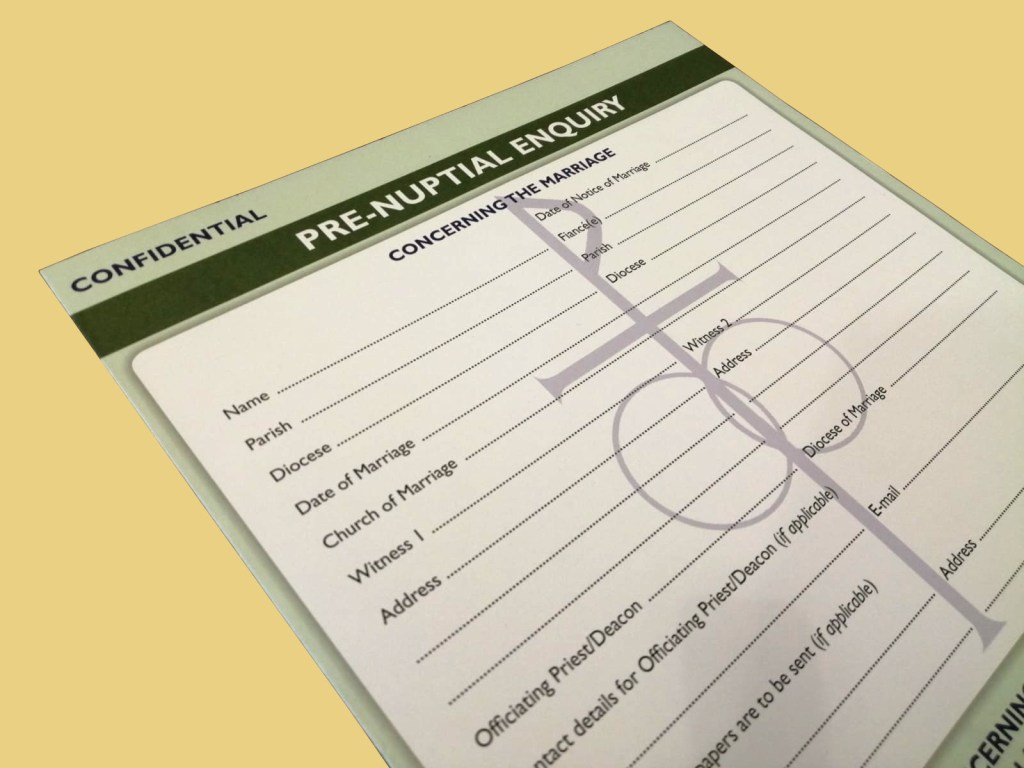
You should at this time turn your attention to completing the necessary church paperwork. Church papers are always completed in the parish where you currently reside and should be signed off at least three months prior to your wedding. Six months out from your wedding you should both obtain the following certificates so that you can meet with the priest in the parish that you currently reside to complete what is called the Pre-Nuptial Enquiry Form.
- Baptismal Certificate: Each of you should contact the parish of your baptism seeking a new baptismal certificate. When contacting the priest or parish office of the place of your baptism please inform them of your date of birth and your parents’ names. If you were baptised in Ashbourne or Donaghmore church and are getting married in our parish, you will not need to get this certificate as we can look up the details for you.
- Confirmation Certificate: Each of you should contact the parish from which you were confirmed seeking a confirmation certificate. You will need to give your parent’s names and may need to indicate the primary school you attended and the year of your confirmation. In cases where the parish of baptism and confirmation are the same these may be recorded on the one form. If you received your confirmation in Ashbourne parish and are getting married in Ashbourne or Donaghmore Church, you will not require this certificate as we can look up the details for you.
- Declaration of Freedom: In our parish and Meath Diocese the preferred option for establishing your freedom to marry is by means of an affidavit which is sworn before a solicitor or peace commissioner stating that you are over 18 and that you have not been married before in either a religious or civil ceremony. A diocesan form for you to take to your solicitor or peace commissioner for signing is available from our priests and from the Parish Office.
- Pre-Marriage Course Certificates: When you have completed your Pre-Marriage Course with Accord you will receive a certificate. This should be given to the priest who is helping you with the church paperwork.
- Pre-Nuptial Inquiry Form: When you have your three certificates (baptism, confirmation, Pre-Marriage Course) and your affidavit you arrange then to meet the priest in your parish. Three months out from your wedding in the presence of the priest you both complete a Pre-Nuptial Inquiry Form. The completion of this form for each of you brings the church paperwork to an end. The Pre-Nuptial Enquiry Form and all the other paperwork detailed above are filed in an archive in the parish where the wedding is taking place. If the wedding is outside of Ashbourne Parish, the papers are forwarded in a timely and confidential manner to the parish where the wedding is taking place.
Please note that if you or your fiancé has been previously married or are non-Catholic it is essential that freedom to marry, be established before any firm wedding arrangements are made. The priest taking charge of the church paperwork will guide you with these matters and any application for Permissions or Dispensations from the Diocese that may be required.

Step 4
Three Months before the wedding
Finalise Ceremony Details
At this time, you should finalise your wedding ceremony details. You should make sure that you have chosen the readings, the Mass or liturgical text and the particular vows you are going to use. You should know who you are asking to read or lead the prayers of intercession. If you are taking the option of creating a booklet this should now be finalised. You are welcome to email a copy of your booklet to our parish for the attention of the priest officiating if you would like it checked over.
Step 5
Ten days before the wedding ceremony
Have a Rehearsal
About a month out from the ceremony it is a good idea to organise a wedding rehearsal with your priest solemniser. It normally takes place a few days before the wedding. If possible, alongside yourselves, the best man and chief bridesmaid attend this practice. You are asked to bring three things to the practice:
- A booklet for the priest to use on the day of the wedding
- The Green State Certificate to be checked and
- The wedding stipend for the priest.
The stipend is given by the couple to the priest to express thanks for the work done in preparation for the wedding and priest’s care and attention on the day itself. In total the practise takes about forty- five minutes and ensures that the church part of your wedding day runs smoothly.
Wedding Ceremony Options
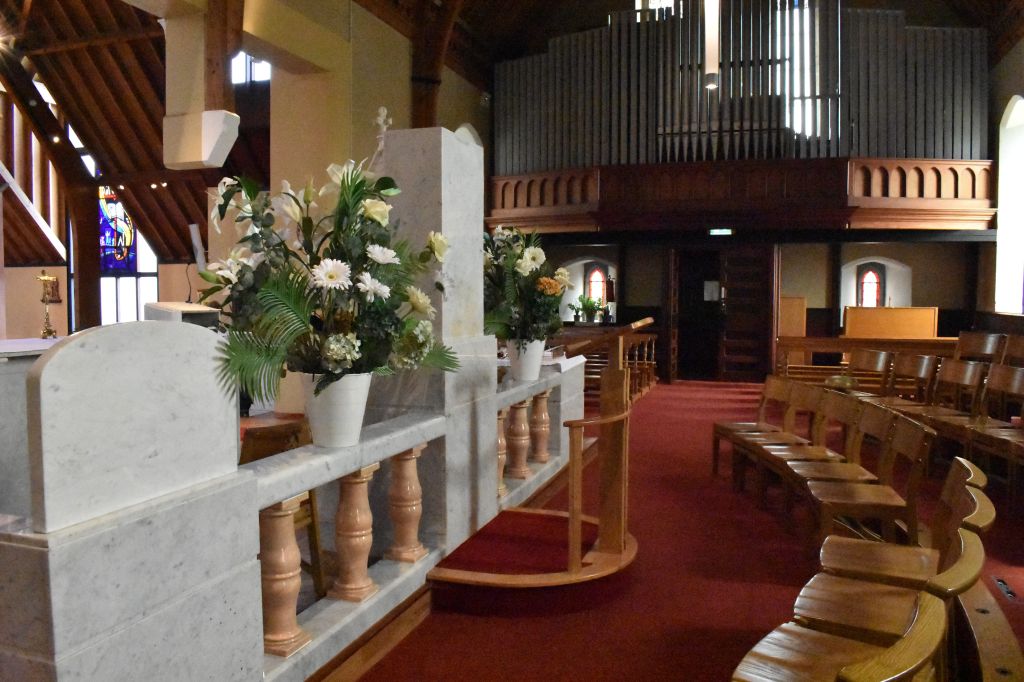
The church ceremony is one of the main parts of your day and we hope that it will be full of meaning and one that it beautifully expresses the vows you make at the altar.
At the outset you need as a couple to decide if you wish to opt for the simple Wedding Liturgy or the traditional wedding rite within the celebration of Mass. Both are valid and work well. The Wedding Liturgy without Eucharist suits a couple who want a shorter liturgy and may have a large number of guests of a different faith or who do not regularly attend Mass. Our parish publishes here the two ceremony options which we hope will benefit couples in making the decision of which one to opt for:
- Rite of Marriage outside of Mass/ without Eucharist
- Rite of Marriage within Mass/ with Eucharist
At a wedding there are two readings taken from the Bible, one is from the Old Testament and the other from the New Testament. You are free to choose the readings for your ceremony. Two family members or friends read these from the ambo. You also should take care in choosing the vows that you will use. There are various options to look at and you should decide which formula you prefer. Couples usually also ask family members or friends to read the ‘Prayer of the Faithful’. Normally there are 4-6 prayers included in the ceremony.
If you are having Mass on your wedding day the gifts of bread and wine are usually brought to the altar by family members. It can be helpful, but it is not necessary to have a booklet which helps the congregation to participate in the rite chosen.
If you choose to have a Wedding Mass, please familiarise yourself with the Mass prayers and know when to stand, kneel and sit. You will find both liturgies on this website and our parish secretary can easily email you a copy of the text of both ceremonies.

